THEORY
MASTERCLASS
WRITING ANIMATION: OLGA & PRIIT PARN PART II
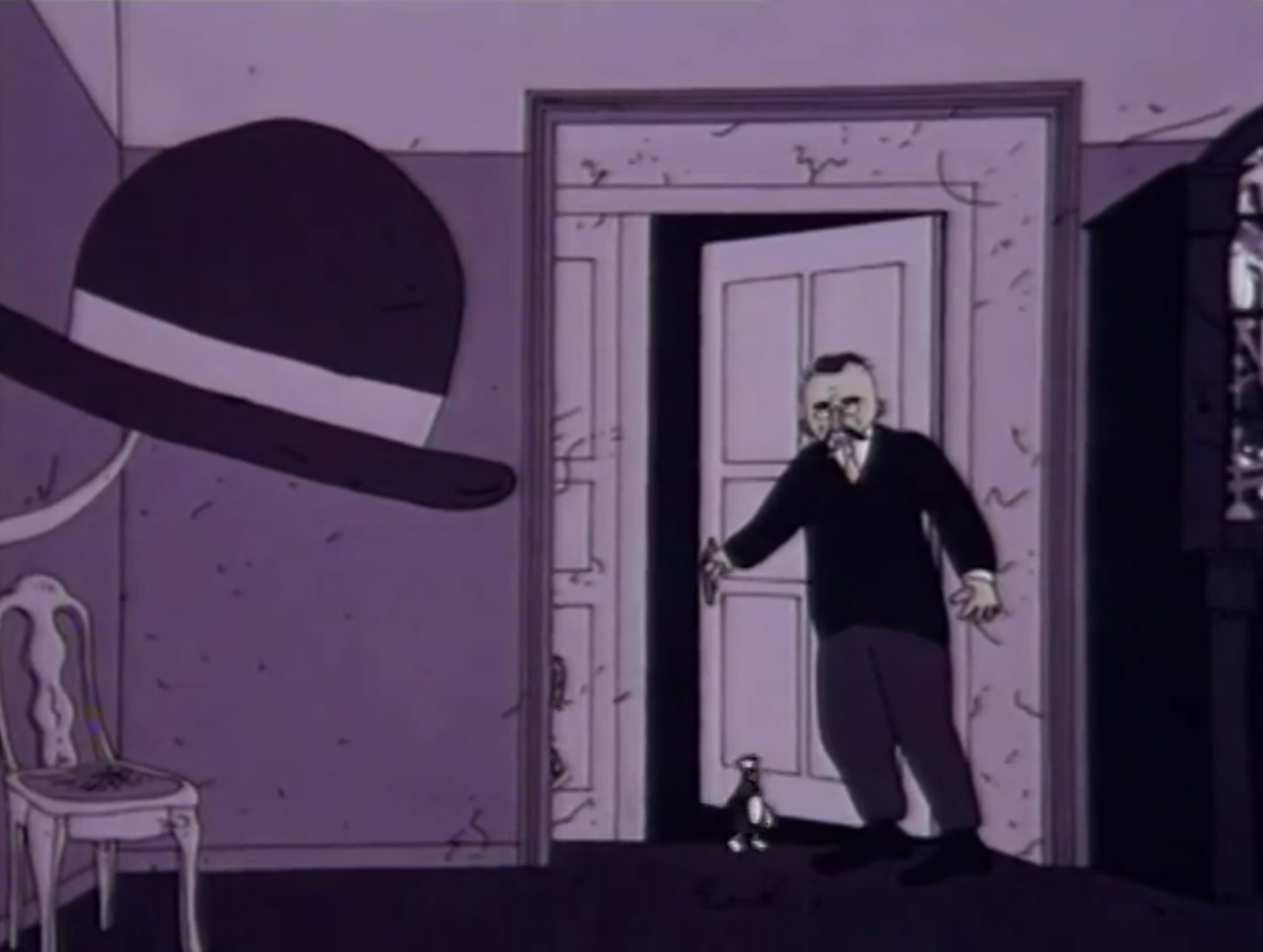
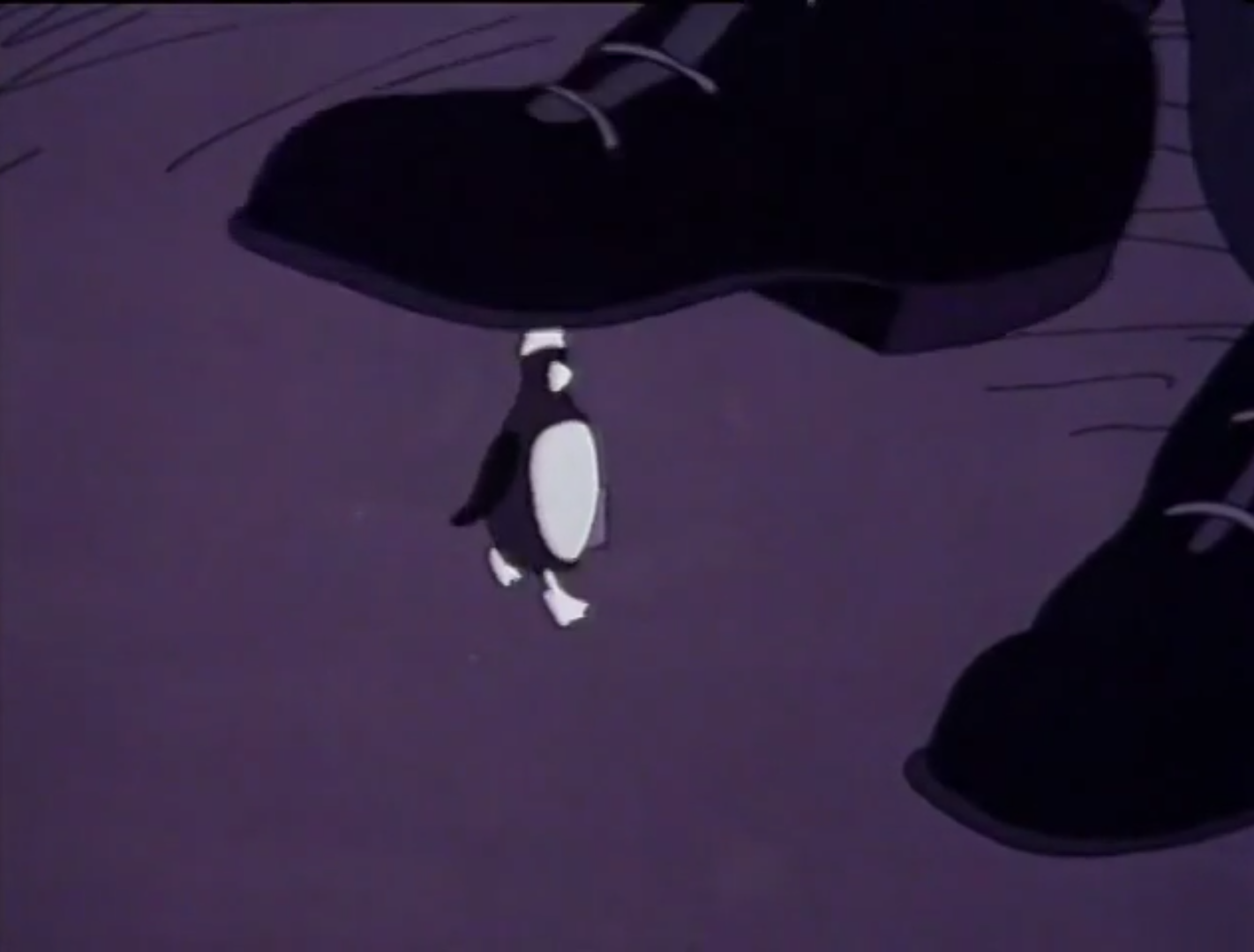
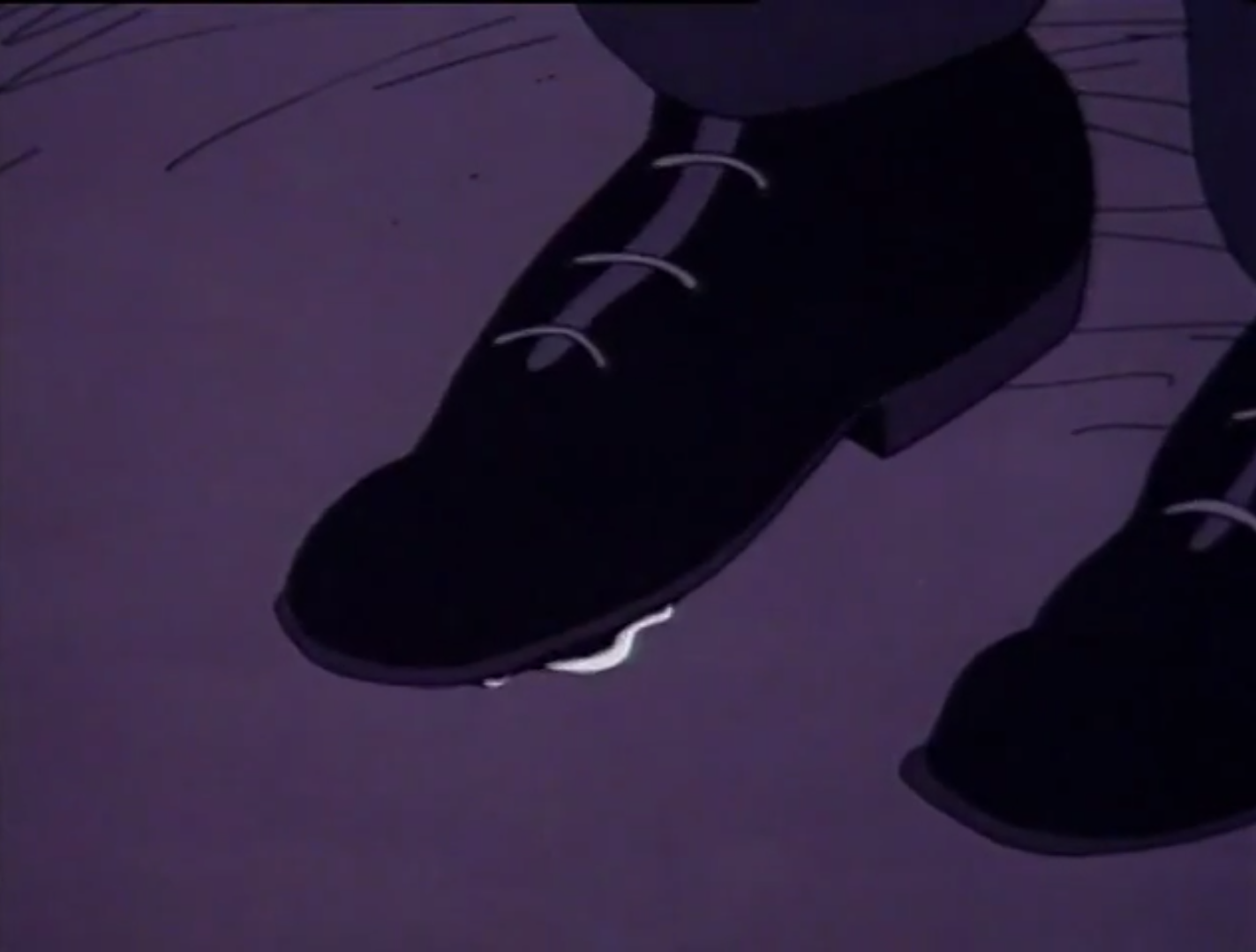
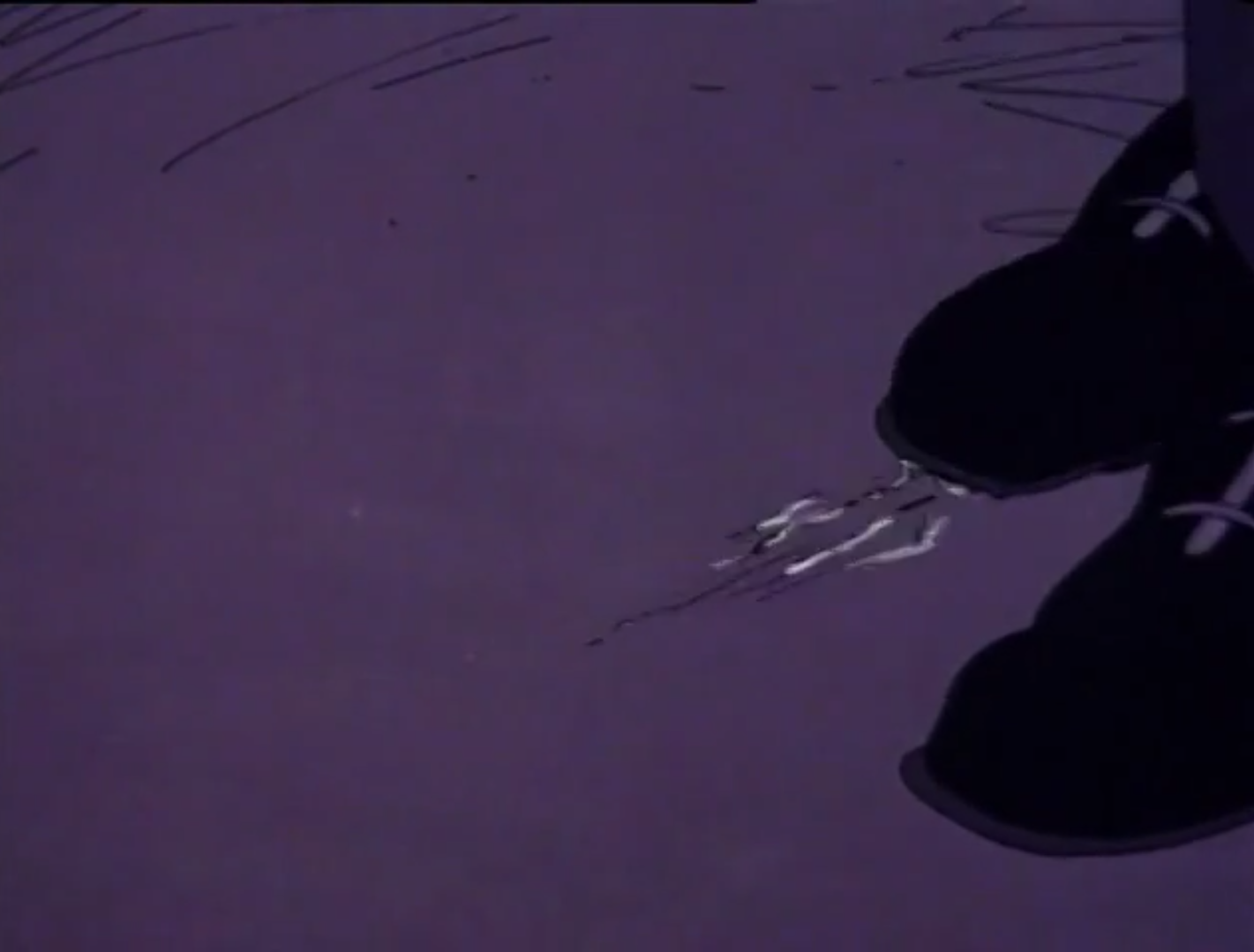
Zepe: Before beginning the interview, just a small detail otherwise I won’t sleep well because I don’t understand very well why in the film 1985, with Lumière, there is a scene where Lumière kills a very small penguin of 10 cm high.
1985 (1995)
Olga Pärn: It’s the bad penguin from The wrong trousers.
Z: Oh, come on. I didn’t even think about that. It’s so sad. I was quite impressed.
OP: It’s a small inside joke for animators.
William Henne: We have an initial line of thought: the question of sound takes on its full meaning in a film like Divers in the Rain, in the sense that the film constantly shifts from one space to another, from one place to another, from one action to another, from one narrative register to another: comedy, daily chronicle, day, dream, sleep, and sometimes these intersect. This makes it a particularly interesting playground for a sound designer. This range of spaces and actions is also found in Luna Rossa.
Georges Sifianos: Before we begin, I would like to ask another question. I read all the earlier discussion, the first part of your masterclass, and I think we can explore the subject of movement itself in greater depth. And I would also like to ask a question at the end of the discussion: what question would you like to be asked that you haven’t been asked yet?
Priit Pärn: What is the question? How are you?
OP: At the end, Priit!
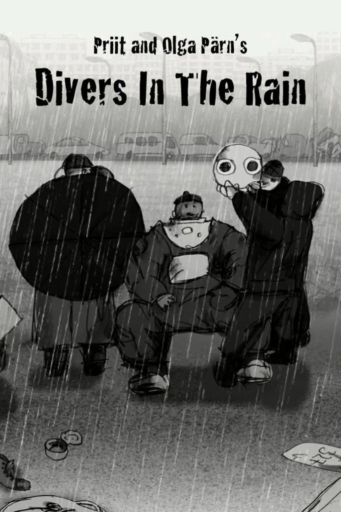
Indeed Divers in the Rain is a very good subject. Do you remember what we started with to make the film, Priit?
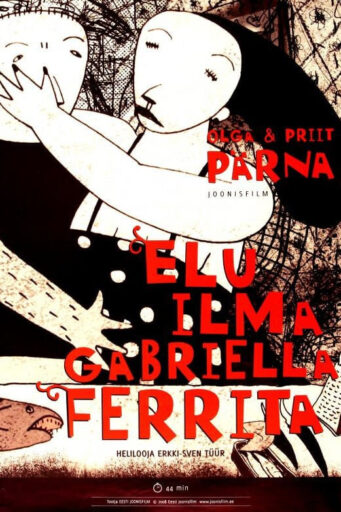
PP: After we made Life without Gabriela Ferri, our sound designer was not disappointed with the sound, but he was not entirely satisfied because of all the music. We told him not to worry, the next film will be made specially for you without any music. It was a joke of course. We started this film fairly quickly.
OP: Yes, we came up with an idea pretty quickly. Every day, I draw little characters in my sketchbook. We live near the sea, and when we drive to our studio, we drive along the coast. One day, I saw a group of divers through the window, probably practising.
PP: We were passing by quite quickly, so it was drawn from memory.
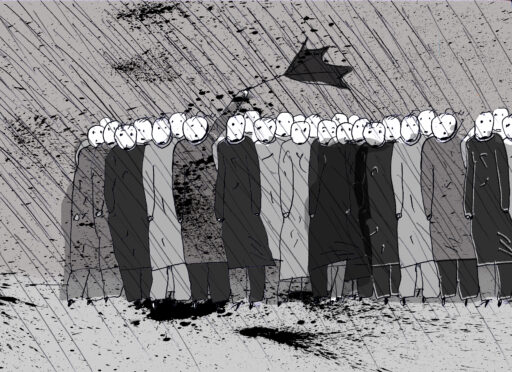
OP: It was a very brief moment, but I found it very interesting to see twelve divers gathered in a circle.
PP: They didn’t have heavy equipment like in the film, just snorkels and masks.
OP: There were several of them standing together, like in a kindergarten, or at least that’s the image I have of it. That was the starting point, and the fact that we wanted to make a film based on sound. These divers were an inspiration for ships and sea life.
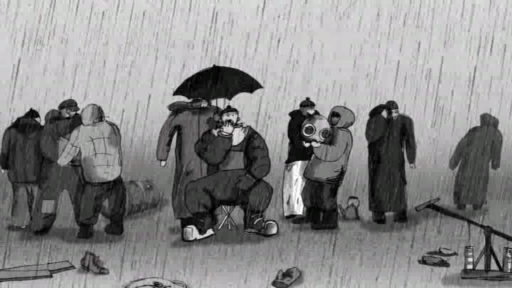
PP: There was also the idea that it rains constantly here. I don’t remember very well.
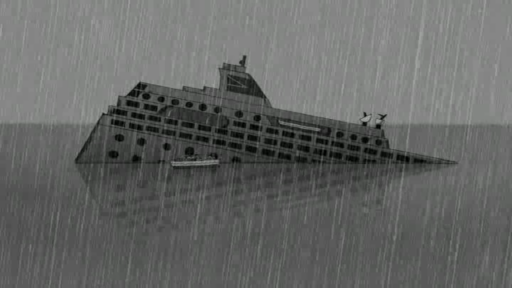
OP: There are two completely different worlds, as William so aptly put it: that of the woman who sleeps and that of the man who faces reality. He must survive in this Estonian reality of November, where it rains incessantly and it is cold. He must work, but nothing yields results. He must save the ship that is sinking.
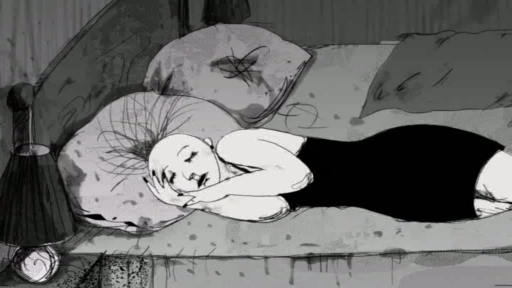
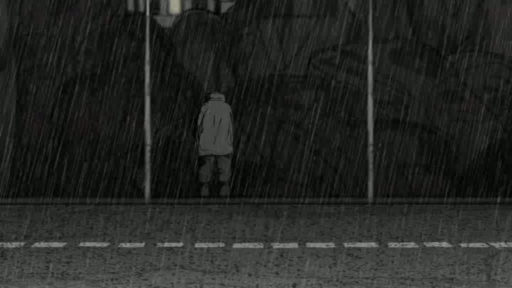
PP: They don’t really know what they can do to help the ship; it’s not that clear.
At a certain point, we realised that we were describing the world of men.
We had planned to make a trilogy. The second film, Pilots on the way home, deals with the world of men, and the third has not yet been made.
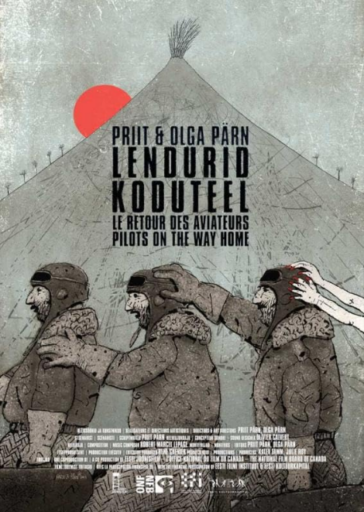
OP: But it has just been staged as a play. In mid-September, Priit’s script for the third part of this trilogy was adapted into a play by actor Tanel Saar.
GS: At which moment came the idea to do a trilogy?
PP: Maybe during the making of Divers in the rain.
OP: Or even after, just before Pilots on the Way Home, when we realised the three films are connected: divers, pilots and then fiddlers.
PP: It’s hard to say. So many ideas are rushing through my head. I don’t really remember.
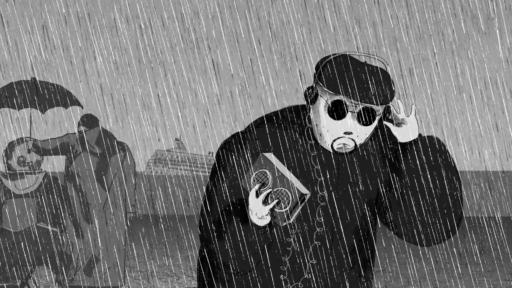
OP: Our Estonian sound designer for Divers in the rain, Horret Kuus did a fantastic work for Life without Gabriella Ferri. For Divers in the rain, I remember very well that he constructed the sound of the men’s world like a live-action film. He was very skillful with the sound of rain, which is constant, to give the impression of permanent depression.
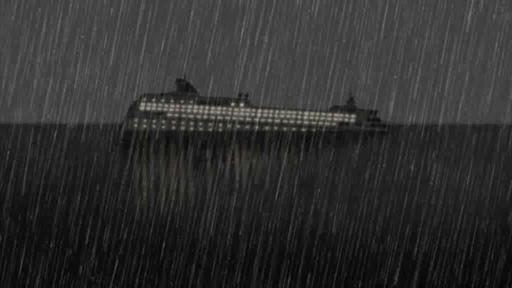
PP: In fact, the sound of rain is like background music.
OP: When we did the final mix, I was impressed by how cleverly Horret designed all these different levels of rain. It’s not always the same sound. We always feel that our ears are ready to accept it, not as something boring, but as something that keeps us in the rain. And for the woman’s world, she is asleep. While talking with Horret, we realised that the very important aspect that needed to be developed was that all the sounds that occur in her dream give the impression that she is underwater. It’s like a huge filter covering the woman’s dreams, because in reality, she is a diver. It’s not something you can clearly perceive, but it gives the impression that she is underwater. At the beginning, after the scene where the drops fall one by one, she is underwater during all these dreams, with a very distinctive soundscape in these parts of the film. Just before this scene, at the beginning, when they are together, we are still in reality, marked by Éric Satie’s music, the Gymnopédies, which returns at the end of the film. It is like a frame around the story. And within that frame, you have the woman’s dream, the man’s reality and the boat, of course. Everyone on board the boat is waiting to be rescued.
Z: I noticed that sometimes these soundtracks are associated with objects, reactions, footsteps. But many sounds are found behind the sound of rain itself. Sometimes rain is in the centre, sometimes in the background. The background sound is closer to us and is not completely behind the sound design created for the objects.
Why didn’t you use sound in this film and others as a metaphor? Many of the scenes you depict are quite strange, like the one with a man and a pencil. All these scenes are sometimes not just direct information. They are related to the film in a very particular way, but normally the sounds are quite energetic in this film. When someone walks, you can really hear footsteps. Is this a choice to make the sound more real than what the images show?
PP: This refers to the part that deals with reality, as in a live-action film or documentary: in the background, you can hear the sound of traffic and perhaps the sounds of the city with its houses. It is an extremely realistic sound that contrasts with the part devoted to the woman’s dream.
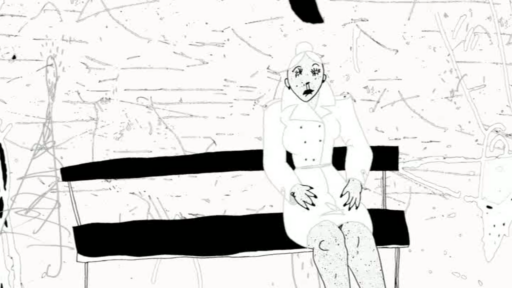
OP: Every dream is constructed in this way. I remember very well how Priit and I decided to keep the dreams very minimalistic. The main goal was to create a sound that would wake her up.
PP: A disturbing noise that eventually prevents her from sleeping. She keeps leaving, searching for a new, quiet place.
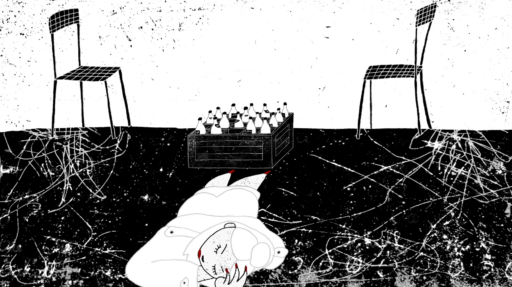
OP: And it repeats every time, and in dreams, it’s always the same pattern. She sleeps and something happens. Priit and I were looking for these disturbing sounds. I remember, for example, that we were on a huge boat heading for Finland in the autumn. The sea was not calm, it was rough. The bottles in the shop and the glasses in the bars made this very distinctive sound.
PP: Thousands of bottles clinking together.
OP: This extremely distinctive and strange sound gave us a feeling of danger, of something being wrong. It inspired Priit to design the two scary chairs. We talked about it with Horret and he built something that was very close to the sound that had inspired us.
During the storyboarding of Divers in the rain, we saw Satoshi Kon’s film Paprika at the cinema in Tallinn. That film is also about dreams, and I remember that when we got home, we said to ourselves that this was exactly what we didn’t want to do. We wanted to limit the dreams part as much as possible and make it really minimalist so that we could focus on the sound.
There is an absurd joke in the film, because the situation is impossible.
It was a pleasure to build and draw them. They are quite simple, but it is important to see how they evolve until they reach their disturbing point.
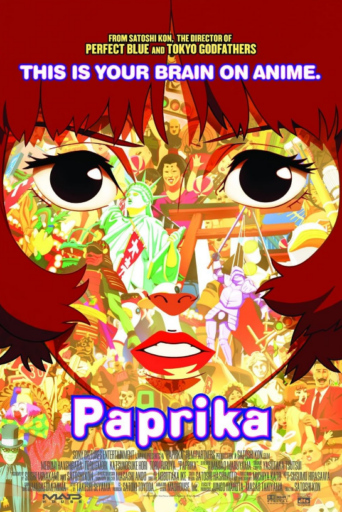
Paprika, Satoshi Kon (2006)
Z: I’d like to talk about how the story was constructed. You were inspired by a scene you saw while driving by the sea. The whole fabric of the story was built around that situation. I assume you didn’t have a definitive storyboard from the outset. It was probably a collage of sequences that could be moved around and replaced. Can you explain the different stages of the film until it was almost finished? I don’t understand how the script was constructed from that starting point and how it evolved and developed.
GS: I’d like to add a question to Zepe’s: when did the idea of parallel threads come to you? Was it at the beginning or later on?
PP: Right at the beginning. I even drew a rough outline of the film’s plot. I always imagine things. I teach my students the same method, explaining how to manage events over time using this process: by drawing a line and dividing it up.
At the beginning of the film, A and B are together. Then they lead their lives in parallel. She goes home and tries to sleep. In her dreams, she probably moves from one place to another, looking for a quiet spot, and ends up on this boat.
OP: She needs to sleep. She finally finds a place to sleep, which is none other than the sinking boat.
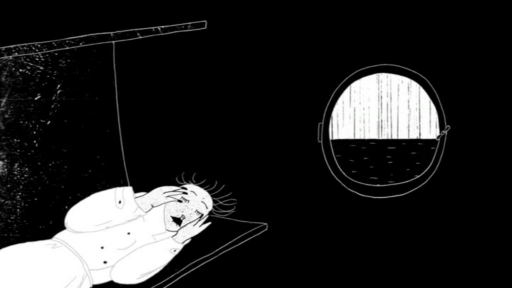
PP: I divided this line into sequences: she/he/she/he. It’s as simple as that. I had to fill these sequences with events taking place by the sea. Everything happens in a single day: they arrive, collect their equipment and prepare to dive.
Why does he need to dive? We don’t know. We are trying to convey the feeling of someone watching a team of ten people doing physical work, such as building a road with shovels, while eight people stand around watching, as if they were lazy. If you are doing physical work, you cannot do it for eight hours without a break. Perhaps what they are doing is perfectly normal. We can see that they are preparing this boat and that they have equipment that is probably not in very good condition.
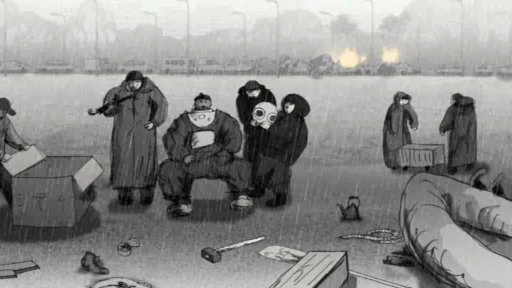
I added a few jokes and gags. I tried to be subtle, without overdoing it. The character design makes them look very clumsy. It seems like their clothes protect them from the rain, but at the same time, they are quite ugly and don’t move much.
OP: Priit developed a special technique for drawing these characters in the film. The world of men is very brutal, as are the drawings and lines.
We developed a whole system: they were drawn on two levels. On the first level, they were drawn very roughly with a marker. On the second level, we added colour to clean them up. Then we put them together. It was a special creative technique.
In the part where it’s raining, there are a lot of bystanders.
It’s a dialogue with Luna Rossa. In both films we used a lot of bystanders.
In Divers in the rain, Priit drew them watching, sitting or standing, often with their backs to the spectators. When you see a company constructing a building, there are always people standing around watching the scene, taking a break or thinking. It’s a constant phenomenon.
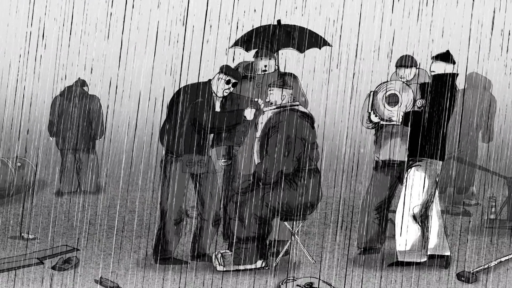
In Luna Rossa, it’s different: the bystanders are watching the camera and the characters.
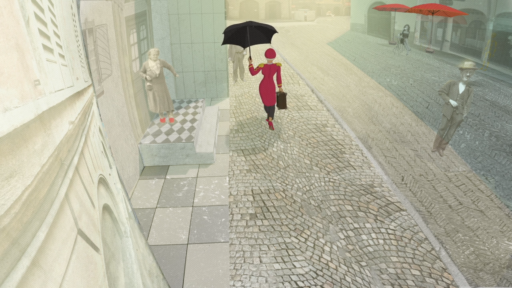
Luna Rossa (2024)
Z: In my opinion, the sound works very well in this film because it is mixed and treated like cut paper. Normally, in cinema and animated films, the sound has space to enter at the beginning of a sequence and exit at the end. In this particular film, the sound is cut like with a knife. It’s very abrupt. It’s there, and then there’s nothing. It works because the characters stop and act like cut-out puppets: they move and then suddenly stop moving at all.
PP: Except at the beginning and at the end of the film where we can hear the music of Satie, there is no music in the film, but the rhythm of drops makes a kind of strange music.
Otto Alder: You explained how you developed the story and showed us the chart illustrating how you arranged the scenes. If I remember correctly, you usually work with a script. If so, at what stage of production was there a script? I remember very well reading your scripts, which were already extremely entertaining and funny.
PP: We need a script. It’s essential if you want to get funding for the production. When I think about the film, especially the dream sequences, which are so visual that I don’t describe them with words, but immediately start drawing them.
There are distinct scenes: near the sea, the car accident, etc. There is a gradual development: all the cars stop, then this quiet driver arrives and has a heart attack, etc. I don’t even remember what the script looked like, I mainly created the film scene by scene.
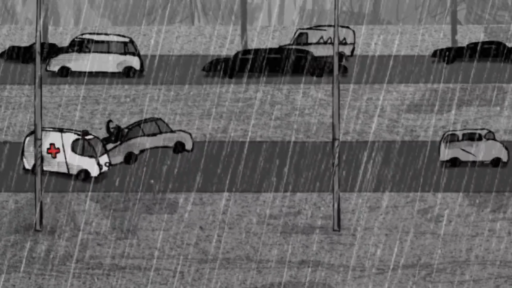
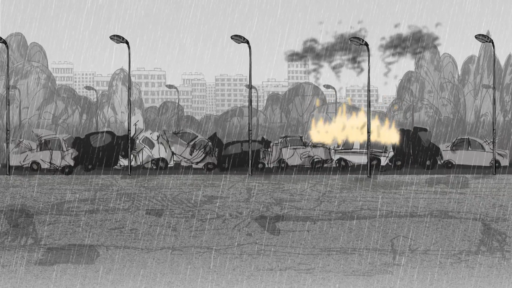
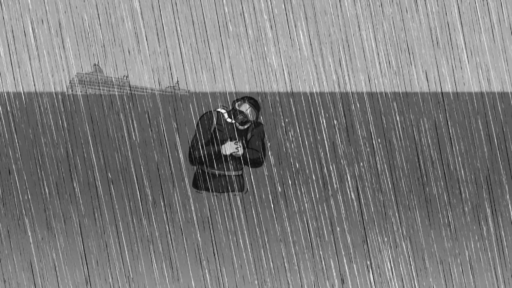
OP: I remember very well that Priit drew and started with the design and style. There were lots of preparatory drawings and a large storyboard when we asked for funding. I remember the sequence with the ship where the sailors try to save the boat.
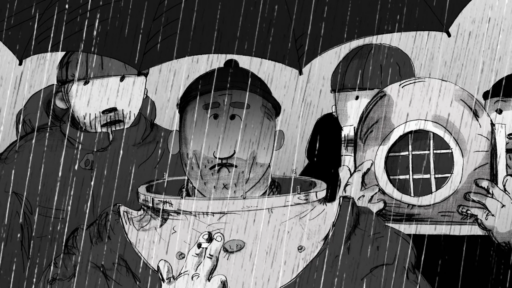
The character of the diver himself is Fellini, sitting there like a director on a film set. This character with his diving suit was a great source of inspiration. A close friend of Priit’s, Finnish photographer Timo Viljakainen, has a grandfather who was a real diver in Finland.
PP: Not in the sea, on the lake.
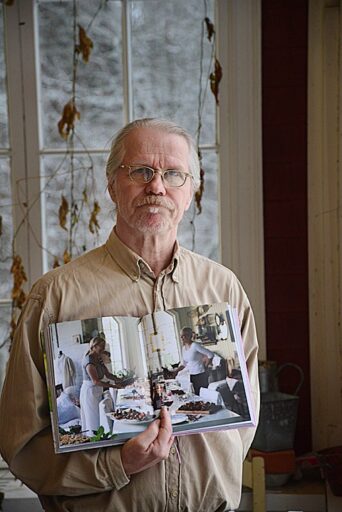
Timo Viljakainen
OP: Priit used some photos left behind by Timmo’s grandfather, which he sent to us. He pointed out that the suit was the actual work suit. I remember Priit drawing the main character looking at this picture. It was a lot of inspiration.
PP: Another character inspired us: during a war between two gangs in Japan, a general sat on a chair on a hill, watching the fighting unfold. He didn’t move, he just observed, smoking his last cigarette, and we tried to use that image for our main hero.
OP: Even in the synopsis used by Priit, we don’t know when the last cigarette will come. So there were many different inspirations, and I clearly remember that we built the graphic universe of the men and the sleeping woman in parallel in order to differentiate them graphically. It was very important to distinguish them visually from each other…
PP: … And to create such a ridiculous situation, when the other diver has a heart attack, they put him in the ambulance.
The divers’ team is working together. The journalist comes to request an interview, but it doesn’t work out and they send him away.
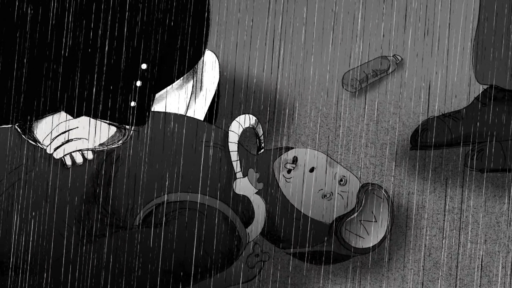
OP: There was one dream with an elephant on a rope, who moves his legs with a terrible sound and falls down.
PP: The rope cut him into two pieces.
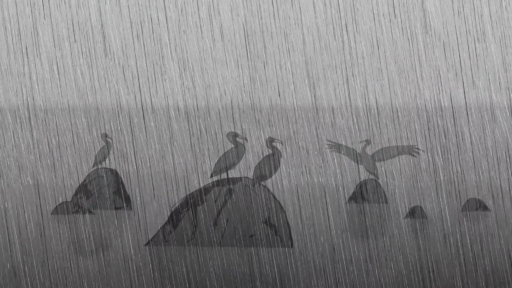
OP: We saw the film on the big screen at a festival somewhere, and we both felt that this dream was too much, so we removed it. So we remade the film. We removed that sequence and replaced it with the sequence of the cormorants standing in the rain. We created the graphic pattern of falling rain, without characters or background, with the sounds of the cormorants. The film as a whole was better once that sequence with the elephant was deleted.
GS: Can you explain why this sequence was too much for you?
PP: You could compare it to one person having a beautiful nose and another having two beautiful noses. It’s just an impression. It’s not a very long film. If you have a new idea, you always have to compare it to what you already have.
There may be a similar situation with Pilots on the way home, with the Kamasutra night. Robert Marcel Lepage, the Canadian composer, composed various pieces and a piece of Indian music in the Bollywood style that was so funny in the scene that we both felt it really didn’t fit.
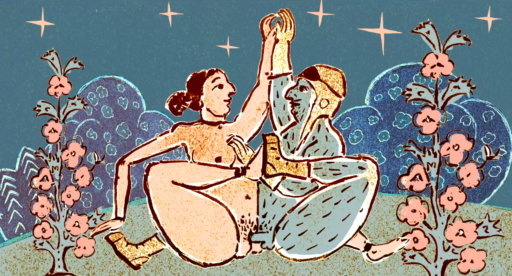
Pilots on the way home (2014)
OP: Because the overall mood of the film is nostalgic. We asked him to redo it in a more neutral way, even though our producer, Julie Roy, thought it was a very good scene.
I think that in Divers in the rain, the film’s progression reached its climax when the woman boards the ship in her dreams and, at the same time, when the superhuman diver arrives and has a heart attack. The scene with the elephant distracted from the main plot. The story is tragic in the end.
PP: You can explain everything but it’s more a question of feeling.
OP: We both had this feeling so that we understood that was the right thing to do. We had the courage to throw it away even though it was a very nice scene.
GS: At the end of the dreams, the lady throws a stork out of the window. You could put this elephant scene in that place…
PP: No. For the stork, the feeling is clear. I had a beautiful dream: I was in an aeroplane or perhaps a helicopter. Sitting opposite me was a stork named Anna. The stork flew up into the sky. And I woke up.
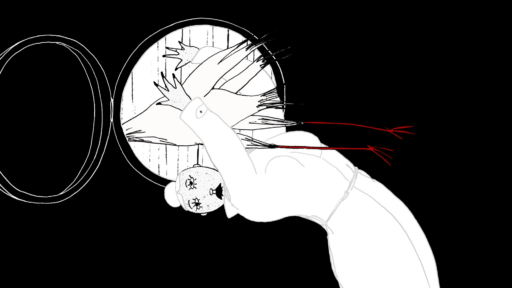
OP: I remember Priit telling me about his dream and me drawing it. It was obvious that this scene had to be in the film.
GS: It’s related to the noise that the stork makes, that annoying noise that we’d be very happy if it would stop, wouldn’t we?
WH: This stork is sounding like crickets.
PP: No, they are making such a kind sound.
OP: It’s a very specific sound. But this stork is not a realistic stork. It’s a constructed sound. You’re right.
PP: She throws it like a wrestler, lifting it by the waist. I have a wrestler background.
OA: In Germany the stork symbolizes the animal which is bringing the babies. And I had the idea that this may be connected.
PP: Don’t think too much, Otto!
OA: When Priit lost kaya, he drew large charcoal illustrations, one of which depicted a large bird with a long beak killing a young girl. In Life without Gabriela Ferri, a stork kills a runner. So I think, Otto, that the stork is part of his mythology.
PP: In some mythology the stork is connected to death.
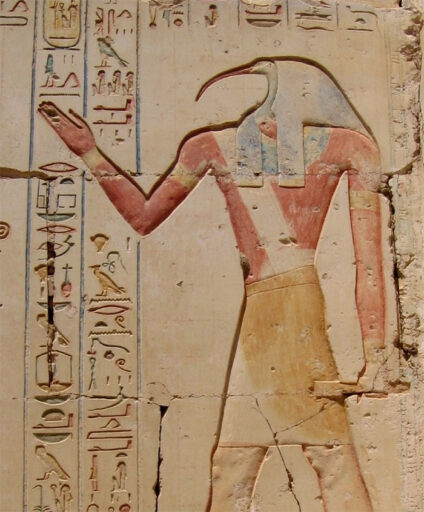
OA: In Egyptian mythology, the god of death, Toth, is a bird, an Ibis which is close to a stork.
PP: But in our films there are no symbols. It is just a stork.
OA: The spectator can find some.
OP: Absolutely!
PP: But it’s their problem.
OA: This couple is actually never coming together. So they have no chance to have children anyway because they have no time to really meet.
At which state of story development are you introducing your sound designer? In Divers in the rain for example?
PP: I don’t remember about this film.
OP: We had just finished the film Life without Gabriela Ferri, a major project, and we knew exactly what the sound designer was capable of. We didn’t talk to him right from the start, but we began gathering sound ideas to submit to him. It was the same with Luna Rossa and Olivier Calvert. We knew what he was capable of.
PP: Horret Kuus, for Divers in the rain, and Olivier Calvert, for Luna Rossa, are both highly sought after because they work very well, especially for live-action films.
If you have a few animated sequences, there’s no point in showing them at this stage.
On the other hand, with a composer, I always keep them informed from the outset. They read the script. But in reality, they only start working once the film has been edited.
Luna Rossa was shown to Olivier Calvert in an unfinished state; there were no backgrounds, just markers. He didn’t have all the information, but he still did a fantastic job.
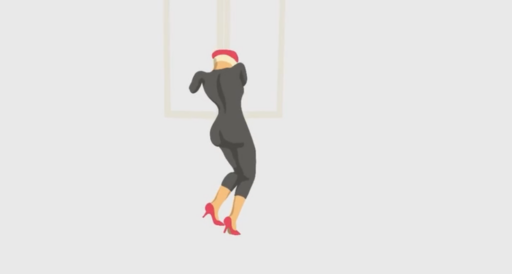
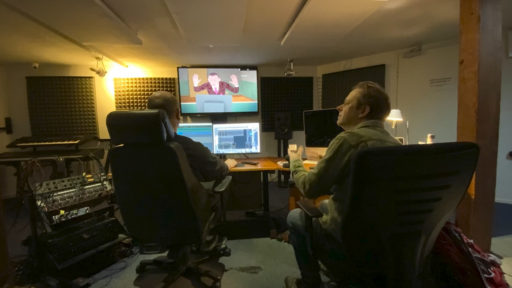
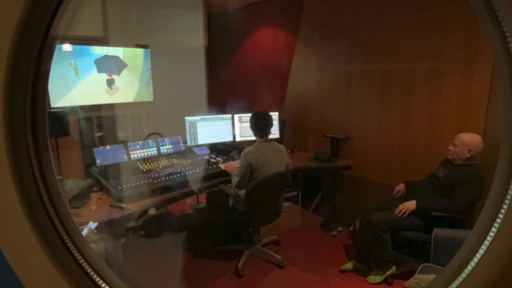
Images taken from the making of Luna Rossa
OP: We had a long meeting with Olivier and he wrote everything. For example, the characters are dancing on the street, what kind of ground are they dancing on? We knew already and we told him every detail.
PP: We finished the sound in February, when he came to Estonia. Then we went to France together for the final mix. At the same time, we worked on the backgrounds until August. The film has evolved a lot visually, and the backgrounds evoke emotions, especially in a film like this, which depicts a city bathed in sunshine.
OP: In Luna Rossa, in the room where the detective is sitting, there is a sound of a fly.
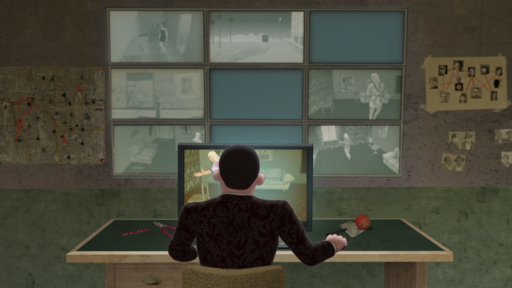
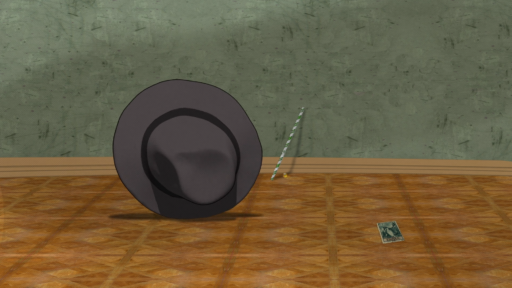
PP: I tried to explain to Olivier that the detective’s hat rolled around the room throughout the film. I asked him if it was possible to keep an almost imperceptible sound, like that of a fly in the room. We don’t show the hat. It’s not important. But we can still hear its sound. Olivier didn’t understand and thought it would be a good idea to put a fly in the room. And it sounded great and worked.
OP: It’s exactly what Zepe was saying: the sound of the fly in the room of the detective is going to this hat sound. Even if we play the game that it is in the same room, it is in fact in some other room. There is the hat moving and the sound of destiny. On a big screen you hear very well that there is in the detective room a small sound of a fly coming to a strong sound of a head.
PP: This leads to a great catastrophe. On the contrary, in the end, it simply falls with a tiny sound. It’s the best sound a falling hat could make. You can feel it. Nothing else could produce such a double sound. It’s very exciting.
OP: We start with this tragic version of Luna Rossa which is the grand finale.
GS: This means that this structural element in your mind has gradually disappeared behind the new sounds. There are different levels of construction in your mind. This sound, which was structural at first, disappears and the spectator only notices it from time to time.
OP: No, it’s still there.
PP: It was there from the beginning. What is the grand finale of this film? We actually expect a major catastrophe with the plane crashing and exploding. But it’s a disappointing ending. Nothing serious happens. He simply takes his hat and puts it on his head.
In a classic dramatic theatrical story, if you see a gun hanging on the wall in the first act, there will be a shooting in the last act. We did the opposite.
GS: Yes, it is a quote attributed to Anton Chekhov.
PP: Yes. Since Chekov, the world is changing and some rules can be reversed.
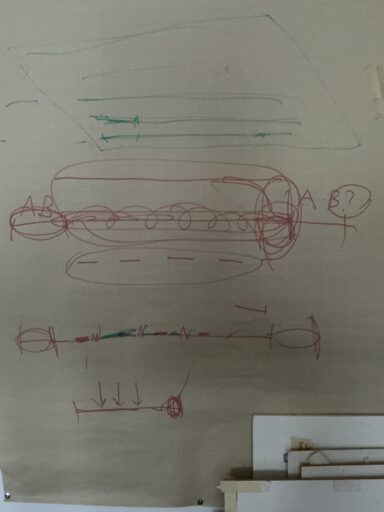
GS: The scheme representing the whole film of Divers in the rain is very rough. Can you explain it?
PP: I don’t remember in what context I drew this. Maybe I was explaining the structure to somebody. When I work with students, I always draw these lines.
OA: In Divers in the rain, in the dream of the woman on the ship, beside the stork is also a suitcase with apples and the apples follow the wave of the ship. What idea did you have in mind when you developed this part?
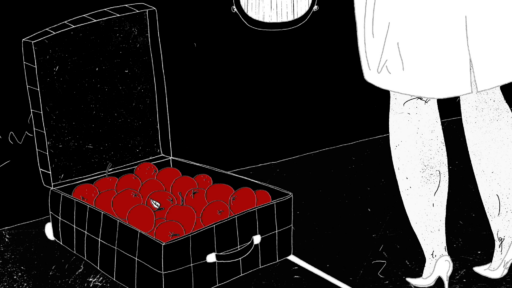
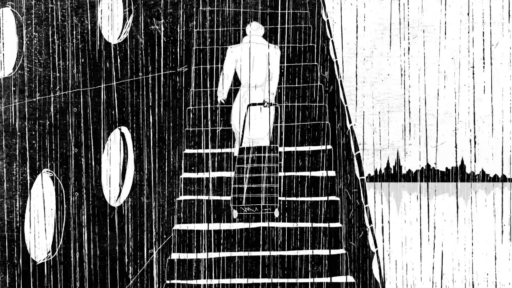
PP: This is, of course, related to the movement of the boat. The stork arrives and makes a racket, the woman throws it out, and suddenly, silence reigns. She is in the same ship. Maybe it’s in her dream, but now she’s sleeping in a sinking ship. It’s peaceful. Then a diver is going to take the bus. The way it is going under the water is visually similar to this ship. Maybe they can meet somewhere. This is a question mark at the end of the film.
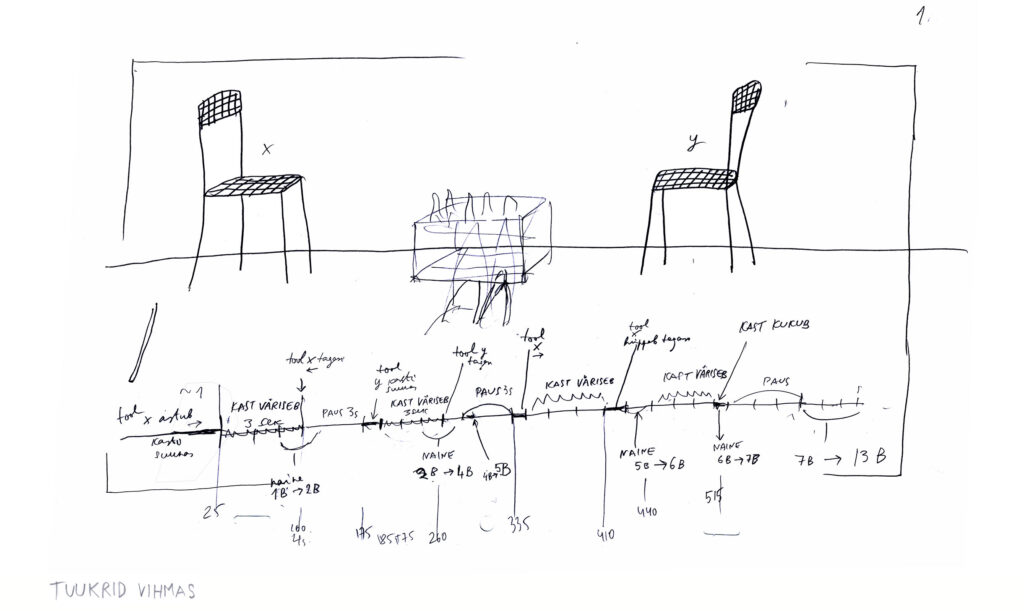
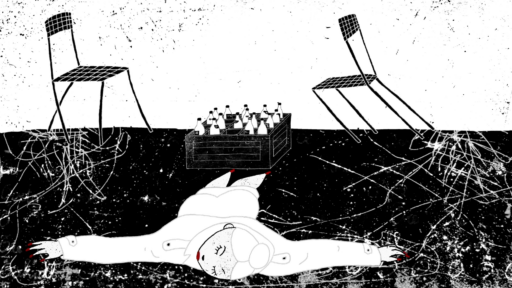
GS: The scheme with the two chairs, I suppose, is about the evolution of the action with separators.
OA: This is a plan for a scene.
PP: I use it to explain to animators what’s going on.
The chairs are using their legs like animals moving and are making steps to the direction of this box with bottles. In this drawing I made very precise timing of the scene:
The X chair is making one step to the direction of the box.
Then the box shakes for three seconds then breaks.
And the chair takes a step back.
Then it’s silent for three seconds and nothing happens.
Then the chair on the right side is making a step to the direction of the box for 3 seconds and back and then again 3 seconds.
The X chair steps for one second, then shakes.
Then the X chair jumps back in half a second.
The final note means falling.
OP: You see below that there are 1B to 2B, 2B to 4B, and the end is 7B to 13B, when the woman is going away so there is a parallel scene with the woman sleeping.
PP: I give these explanations and diagrams to the animators, along with the exact positions of the chairs, the distance travelled, the length of the steps, etc. The animators’ freedom is limited. Before entrusting them with the work, I have developed a precise representation of the scene in my mind and I described it in detail.
Z: On the Koji Yamamura invitation for the film Four seasons, you did an animation with pieces of graphites and charcoal about a couple of a man and a woman. It makes me think about Michaela Pavlattova’s Repete. The subject is similar. Sometimes you stop the movement of the drawing and you are just still animating the texture. The lines and the texture are separated, that’s what I like in this film. Do you remember?
PP: It was created with various techniques. The scene where the fish jumps out of the water towards the men’s heads was created using graphite and eraser on paper, on the same page, under the camera. If I use the eraser very roughly, I don’t clean it up. If you create the next drawing, the paper may move even if it is fixed in place.

The Koji Yamamura’s project Four seasons brought together Priit & Olga Pärn (summer), Atsushi Wada (autumn), Theodore Ushev (winter) and Anna Budanova (spring).
Z: In the scene where the woman and men appear with the soup, the texture moves on its own and the drawing does not move at all. When it becomes very dirty, I think it becomes very interesting.
OP: We agree. We discovered this technique at this moment.
The Vivaldi music was performed by a live orchestra. Otto Alder came to see it with us in Tallinn.
Koji Yamamura sent us an excerpt of Vivaldi’s Summer recording. I filmed Priit drawing an apple with a big charcoal on an A0 page. We put it on the computer with the music, and the charcoal lines being drawn matched the movements of the violin bow. It was moving! We wanted to preserve the liveliness, the dirtiness and all those unexpected movements of the paper.
When Priit is working with charcoal, he is fixing the charcoal.
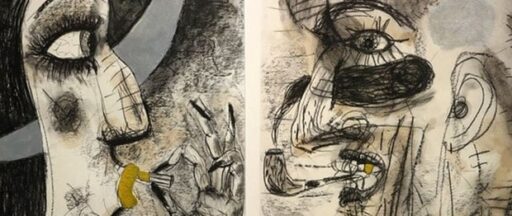
PP: Traditionally charcoal is used for live model drawing. It is fixed with fixative. When I was drawing, I fixed the charcoal maybe 10 or 15 times. I was making a move and fixed the lines immediately. A very special pattern appeared on the surface.
OP: It is not only dirtiness that was appearing but also darkness.
PP: Sometimes I use a piece of apple or banana skin to achieve a beautiful finish. Some colors are obtained with red wine and black tea.
OP: We did not use this in the film.
The fixing of the drawing of the apple generated some strange spots which were disappearing.
PP: The drying process altered the result.
OP: Priit also used a hairdryer which was blowing and moving the surface of the paper.
PP: I was living.
Z: Yes, the time of the surface is mixed with the time of the movement of the film and produces a third sense. You can obtain this with echolins or watercolours under the camera.
OP: The film was made after Vivaldi’s Summer and commissioned by a japanese university (editor’s note : Tokyo University of the Arts, Department of Instrumental Music). We explored what summer means to the Japanese and are using imagery accordingly.
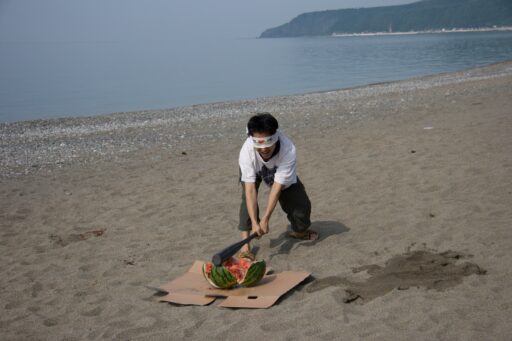
Suikawarii (Photo: Wikipedia)
They have a game called Suikawarii, a summer game played on the beach that involves splitting or crushing a watermelon with a stick while blindfolded. Then the watermelon is eaten. This blow to the watermelon is already a summer storm that corresponds to Vivaldi; it is, in fact, poetry. The Japanese audience really enjoyed it because they recognised the game.
Z: This game exists in Portugal.
OP: A Mexican student told us about Piñata with the idea of breaking a container filled with treats. It is all about movement and animation or drawing, it makes it universal.
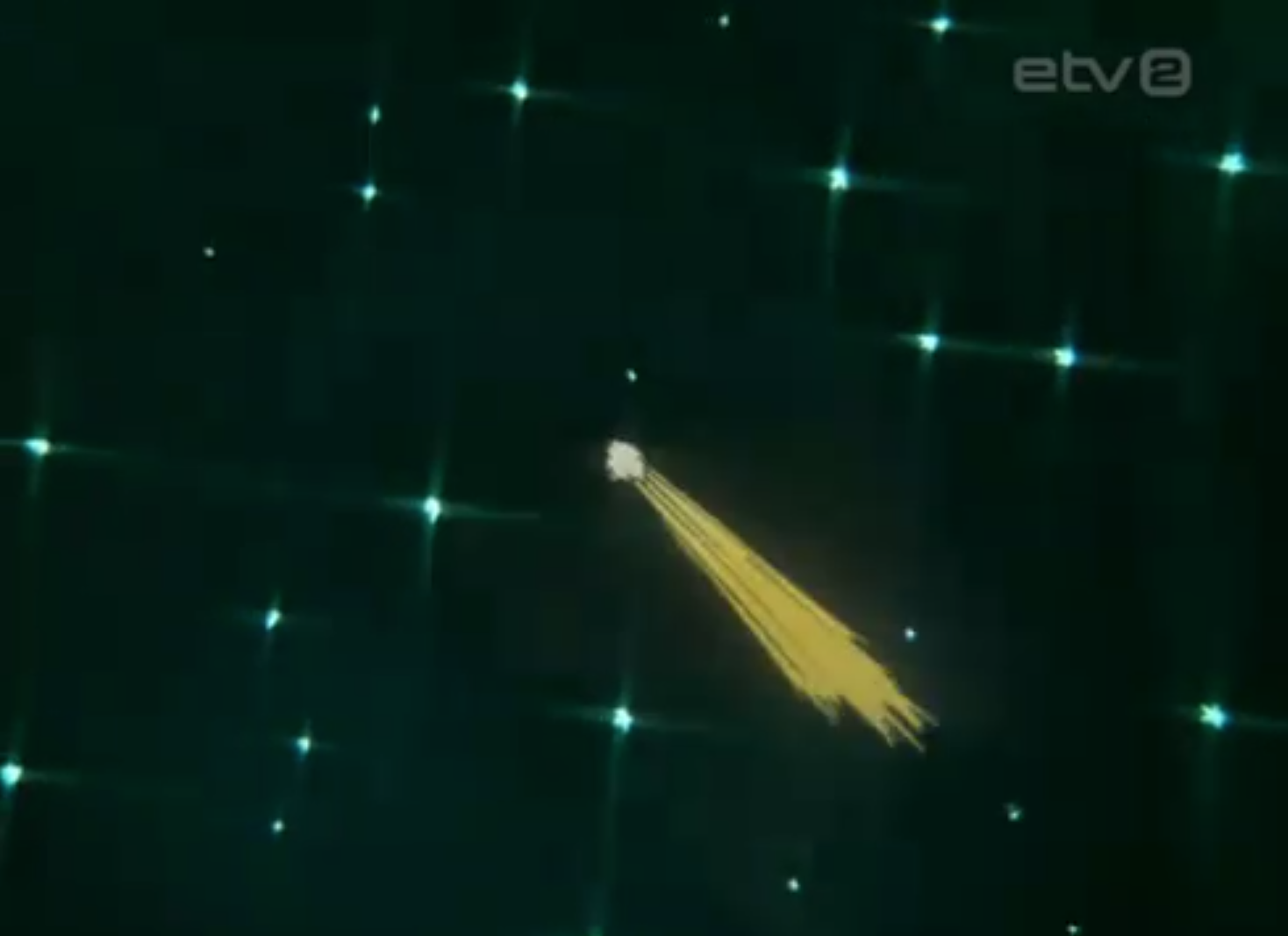
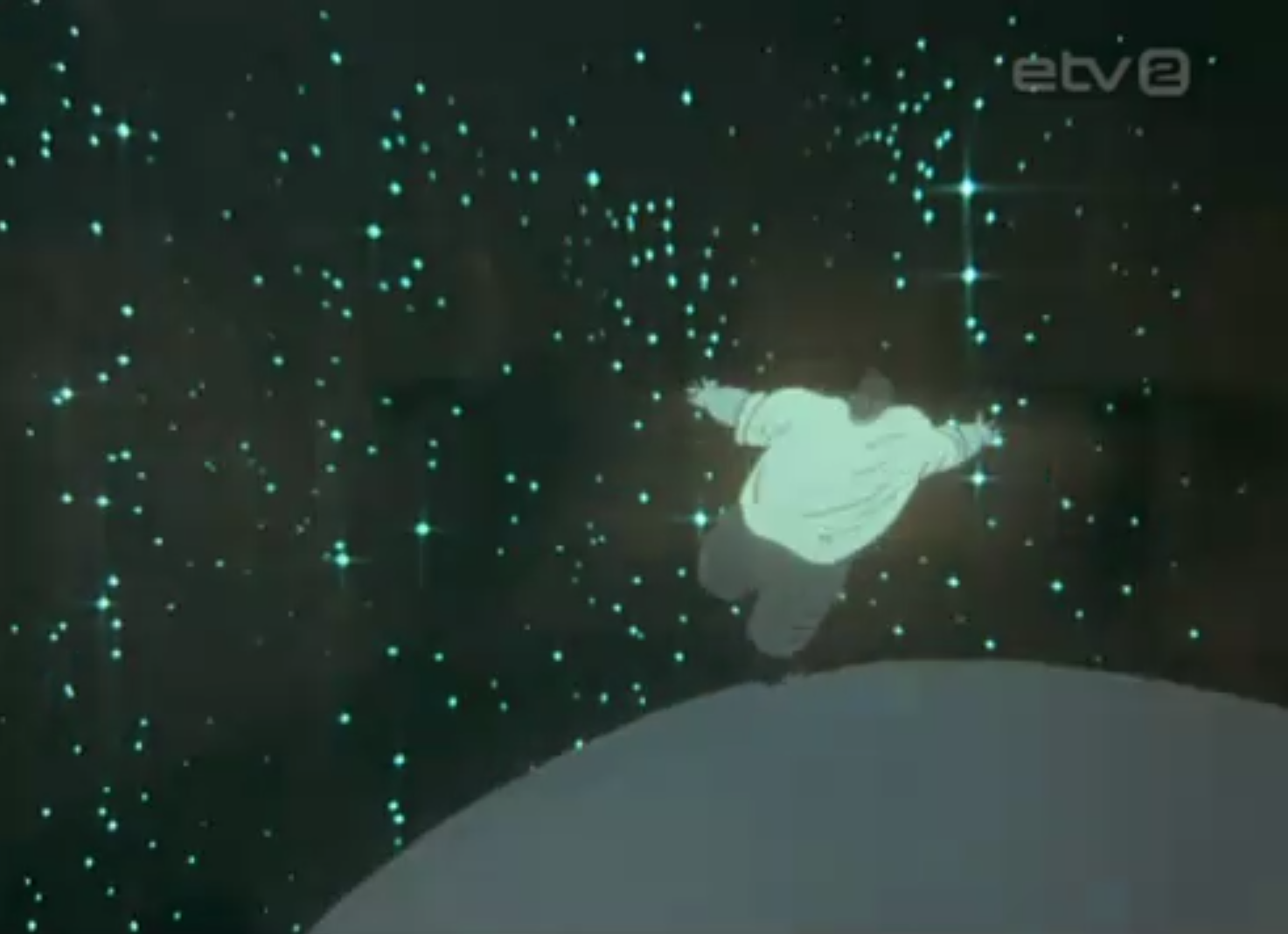
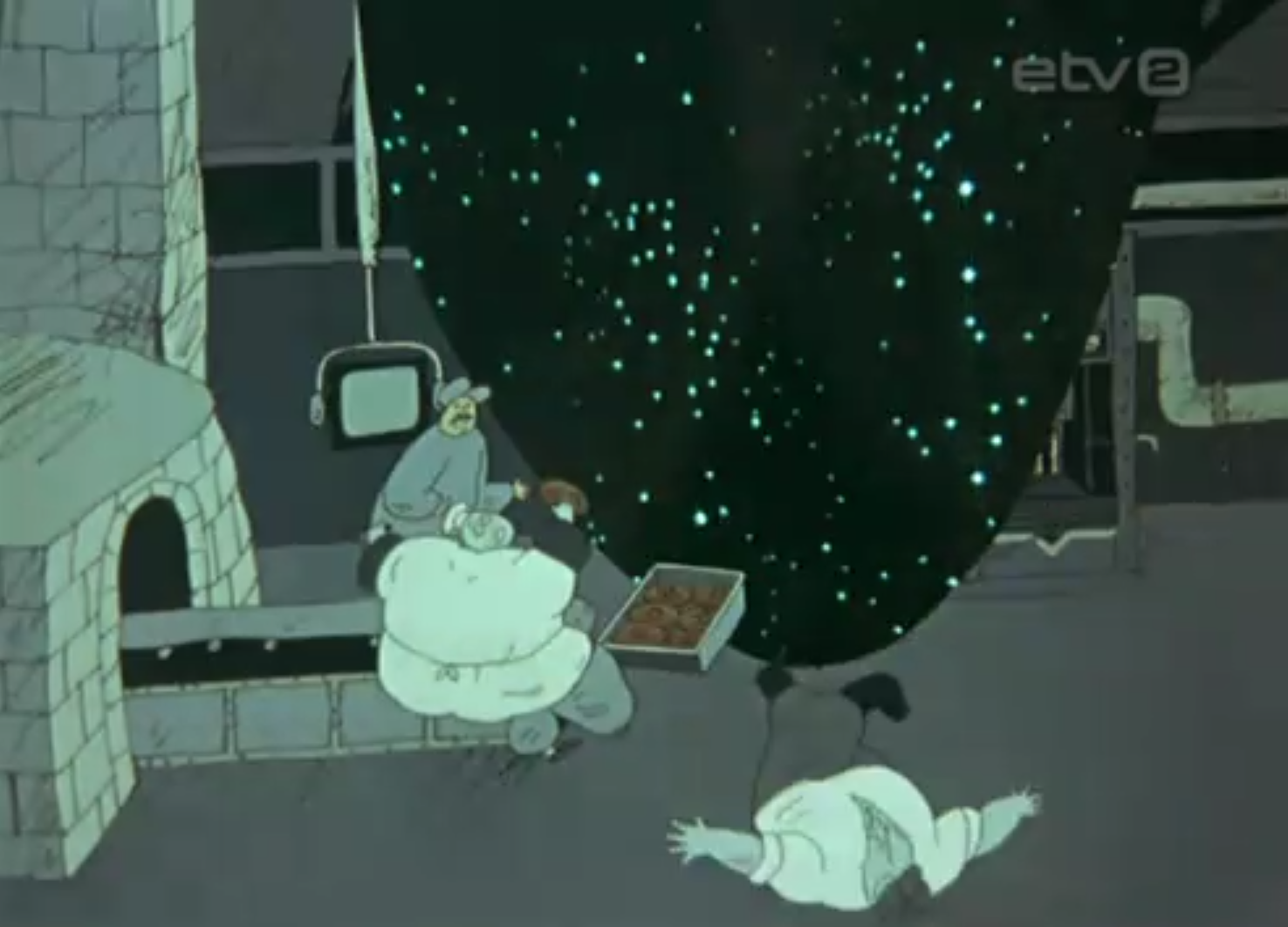
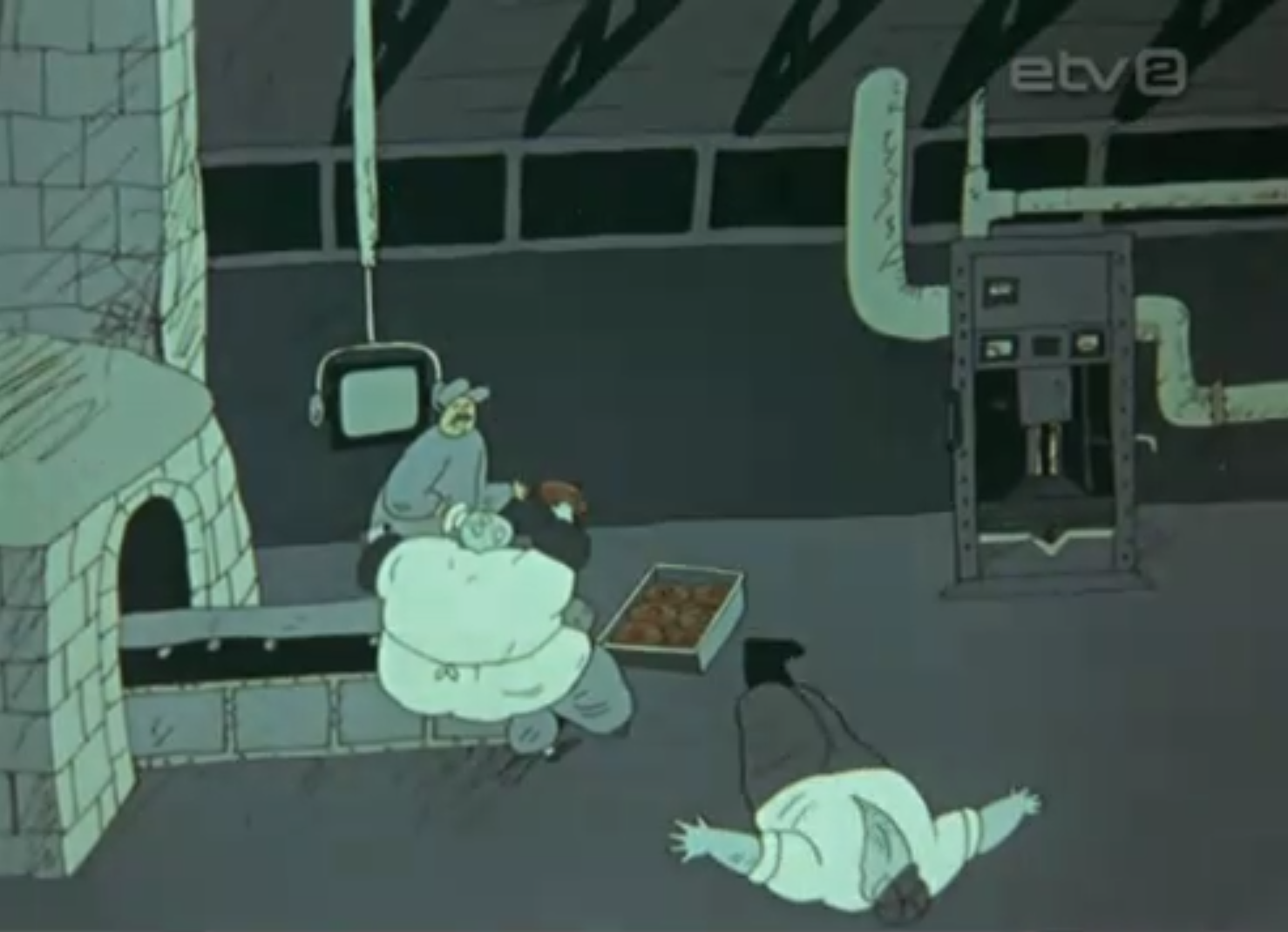
GS: In Breakfast on the grass, there is the scene of the man drinking from a bottle and crashing the bottle down. He opens his jacket and in the continuity the background opens in the same way to reveal a new background of starry sky where he stands alone with the cat from the previous background. The man kicks the cat which goes up to the stars. The man turns on himself and falls. And during his fall the sky background folds and we retrieve the first background.
This is the kind of nice scene I like a lot.
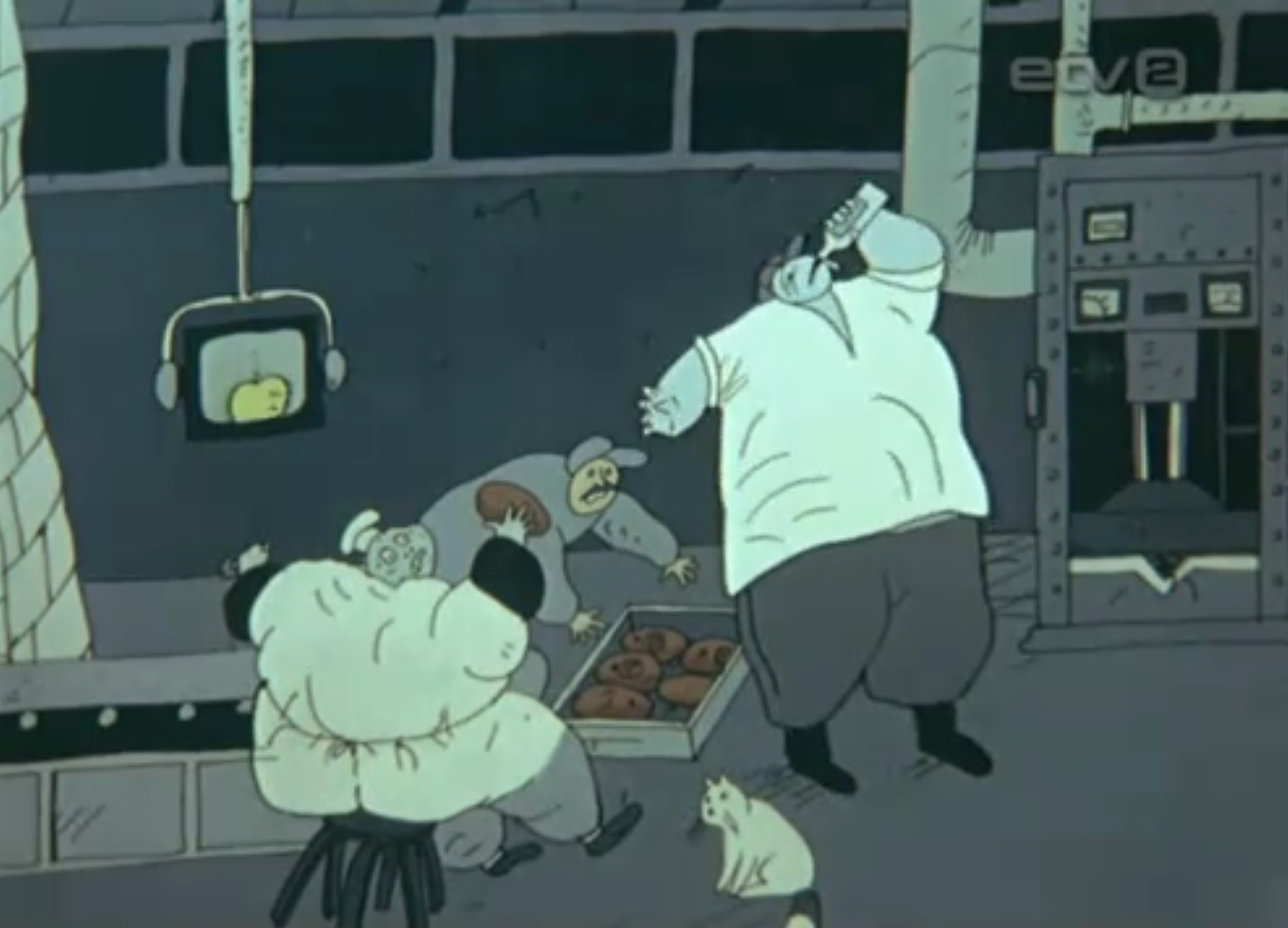

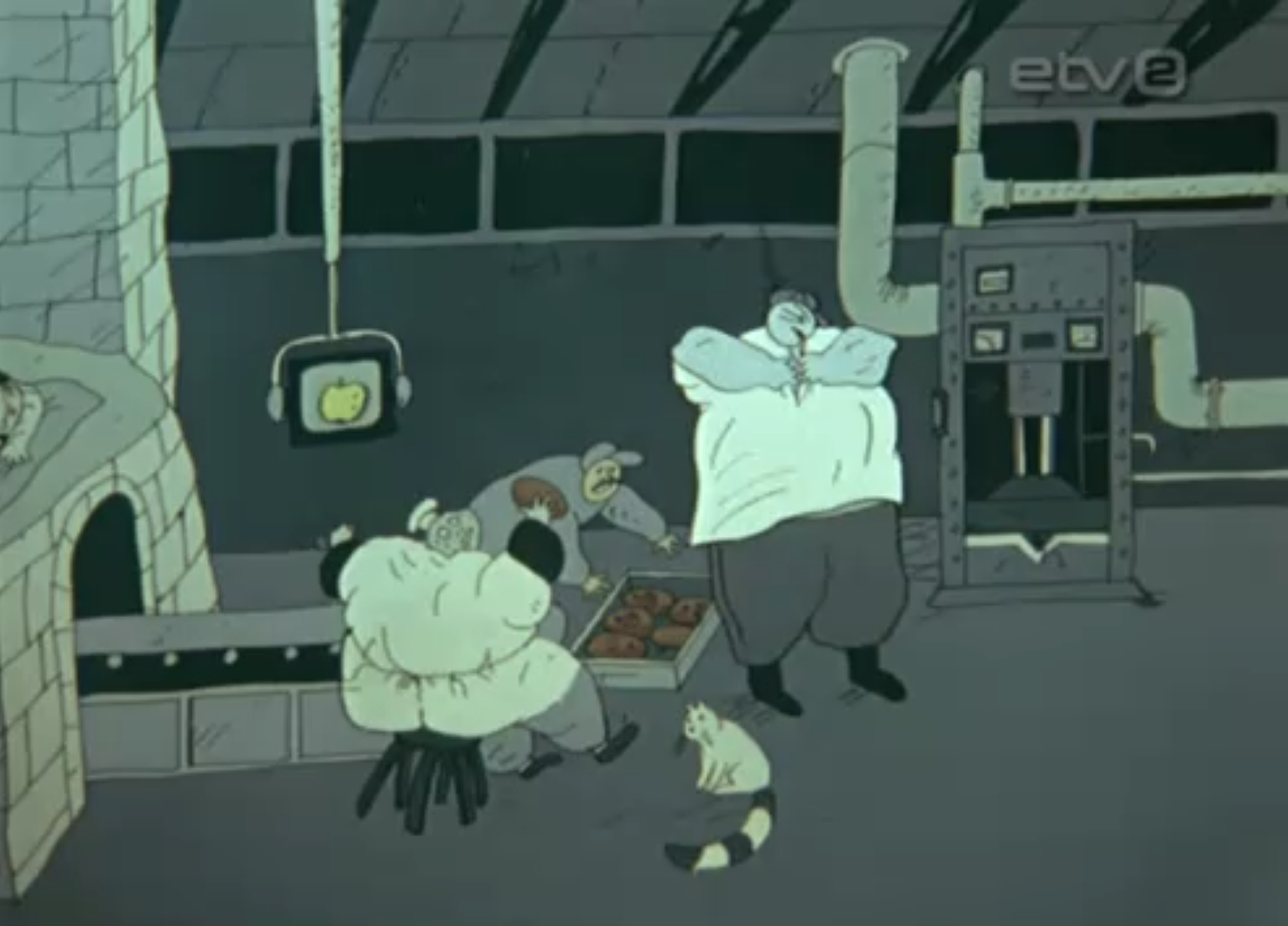
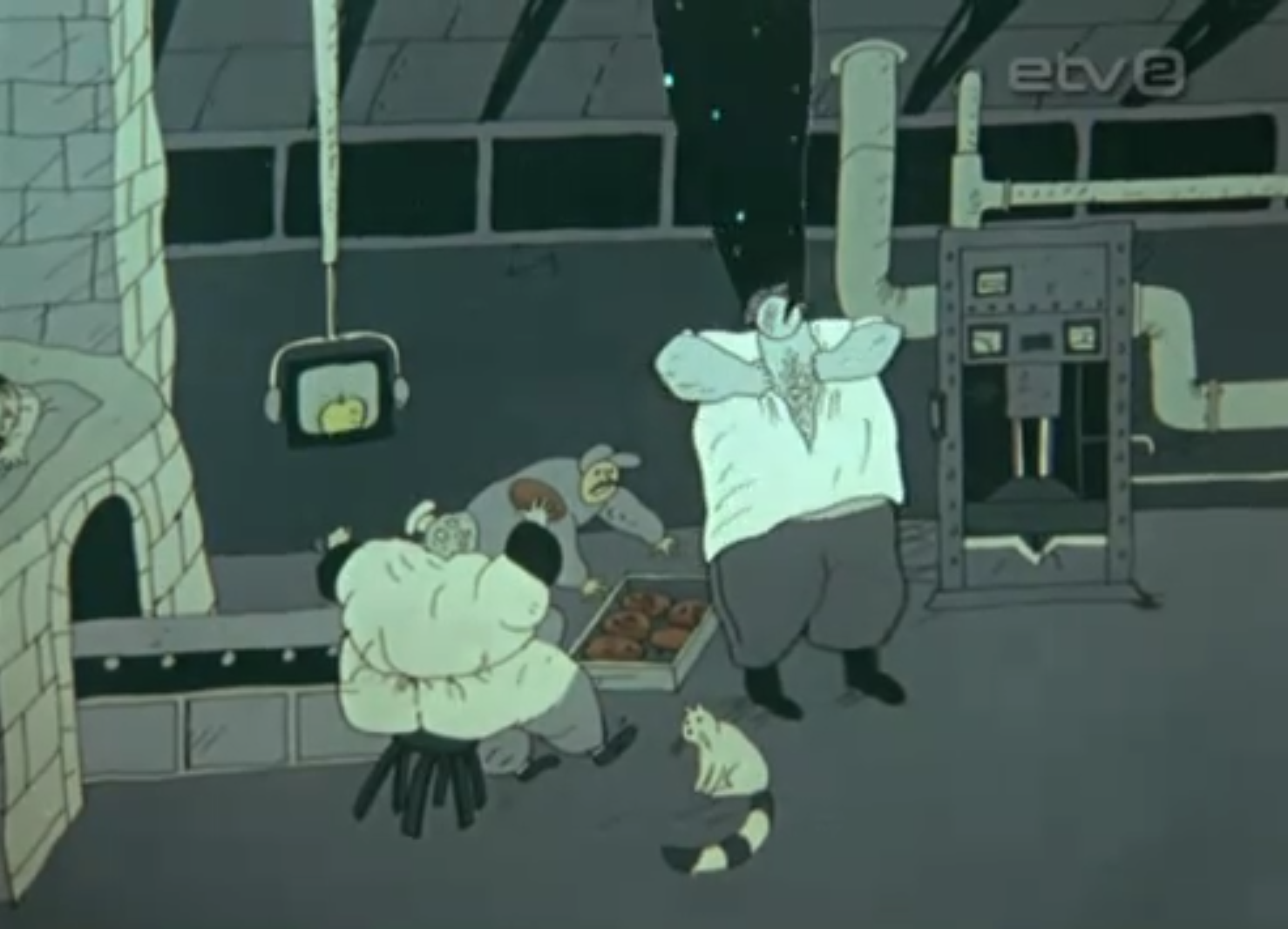
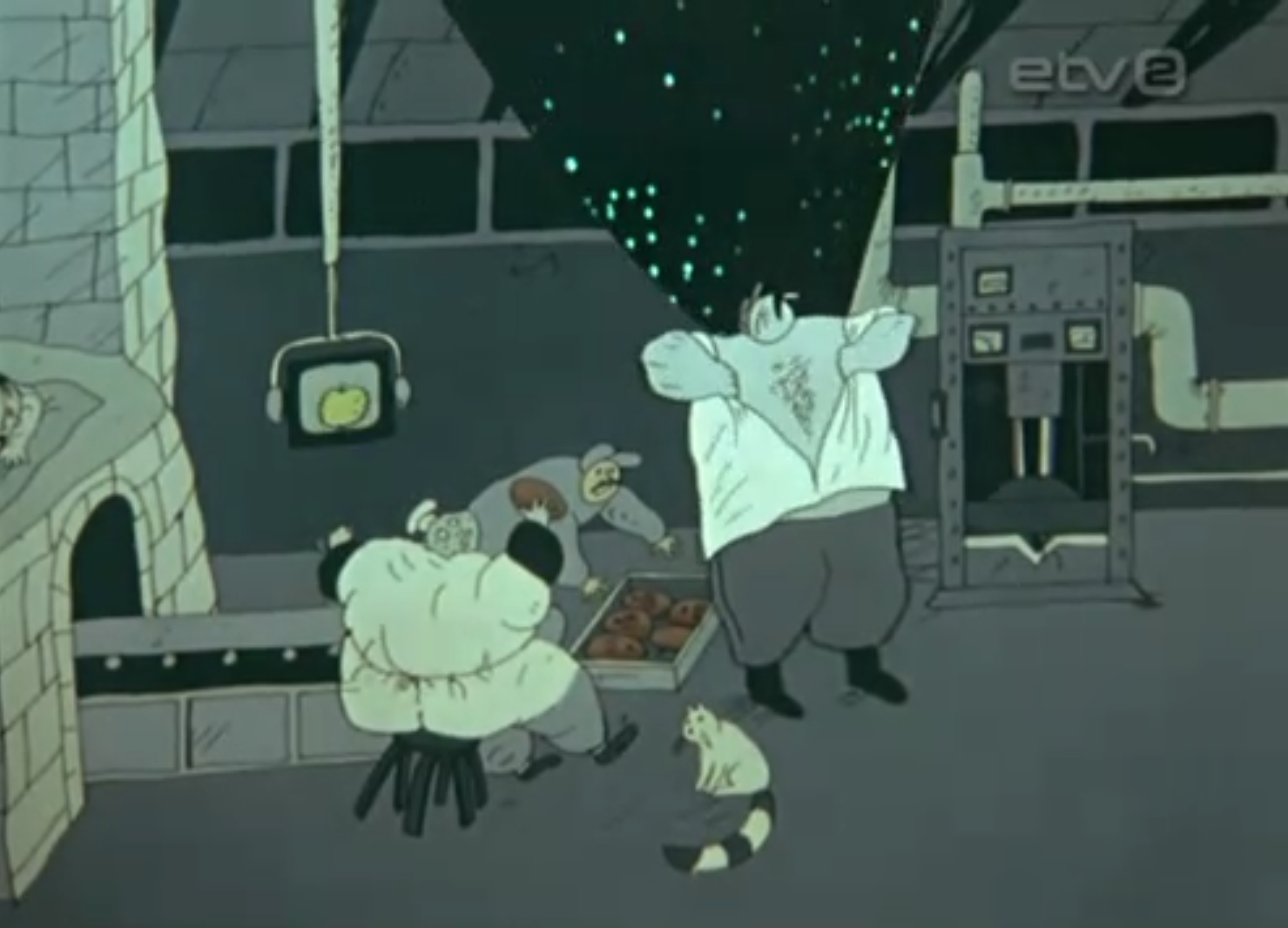
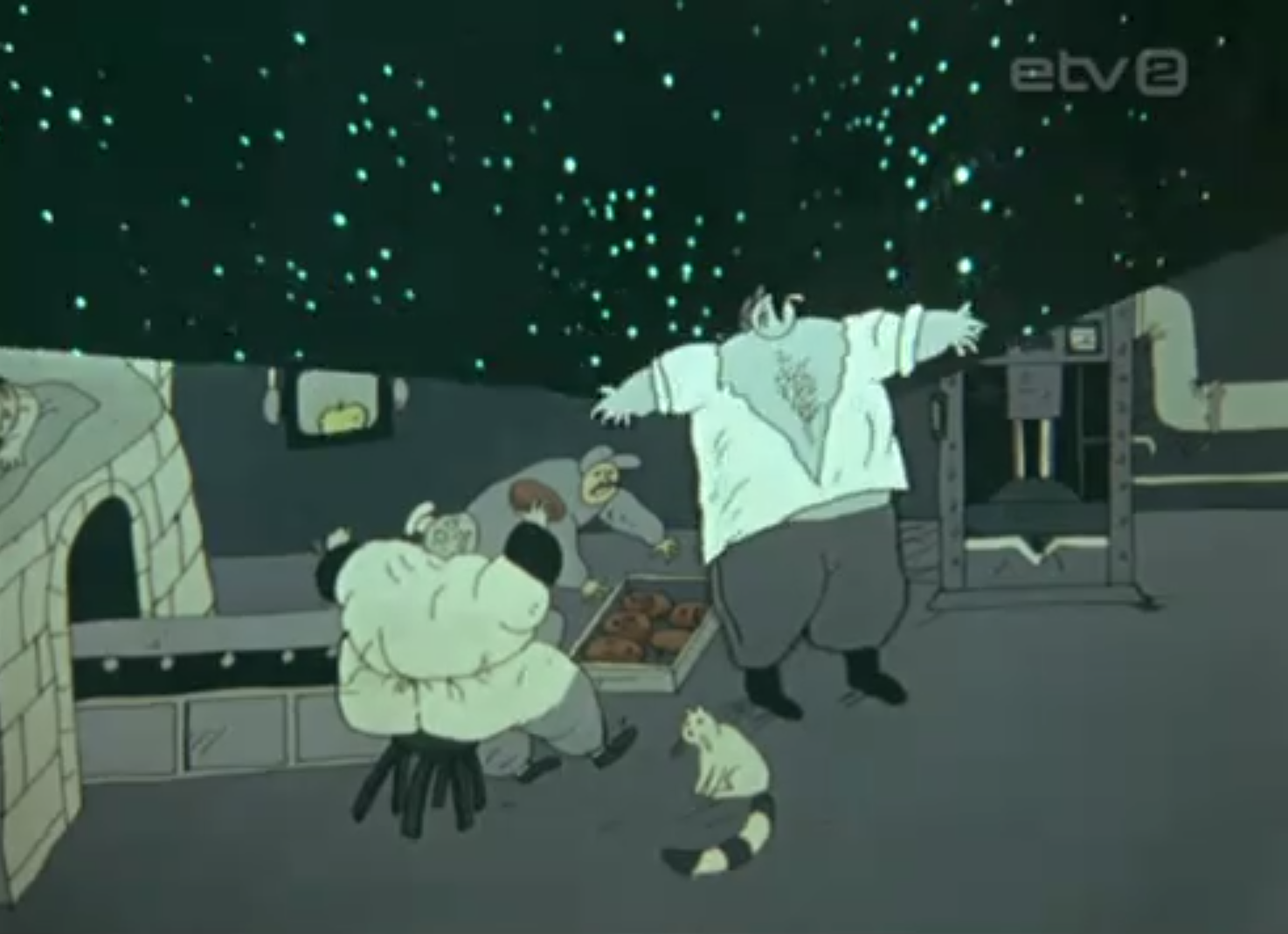
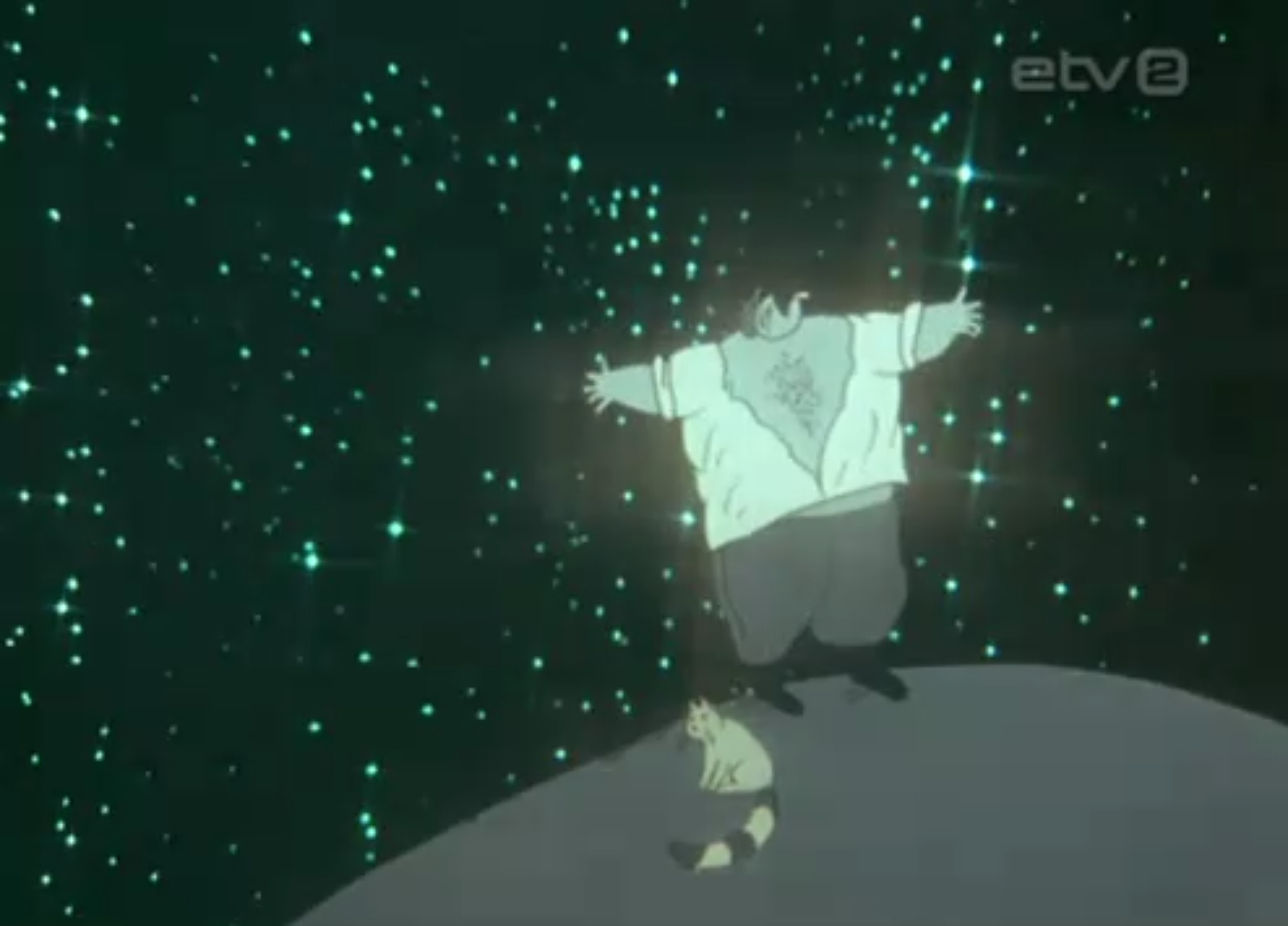
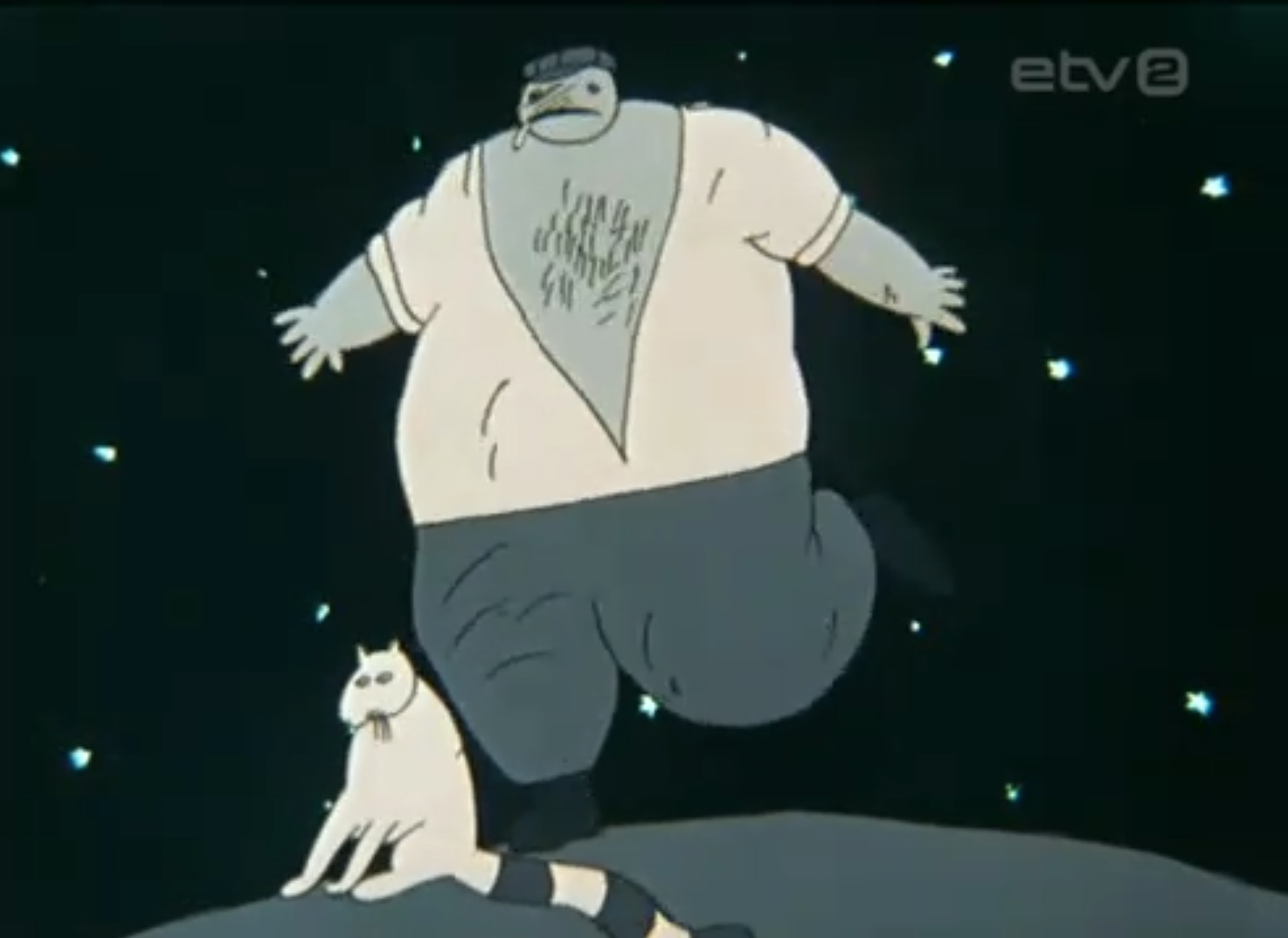
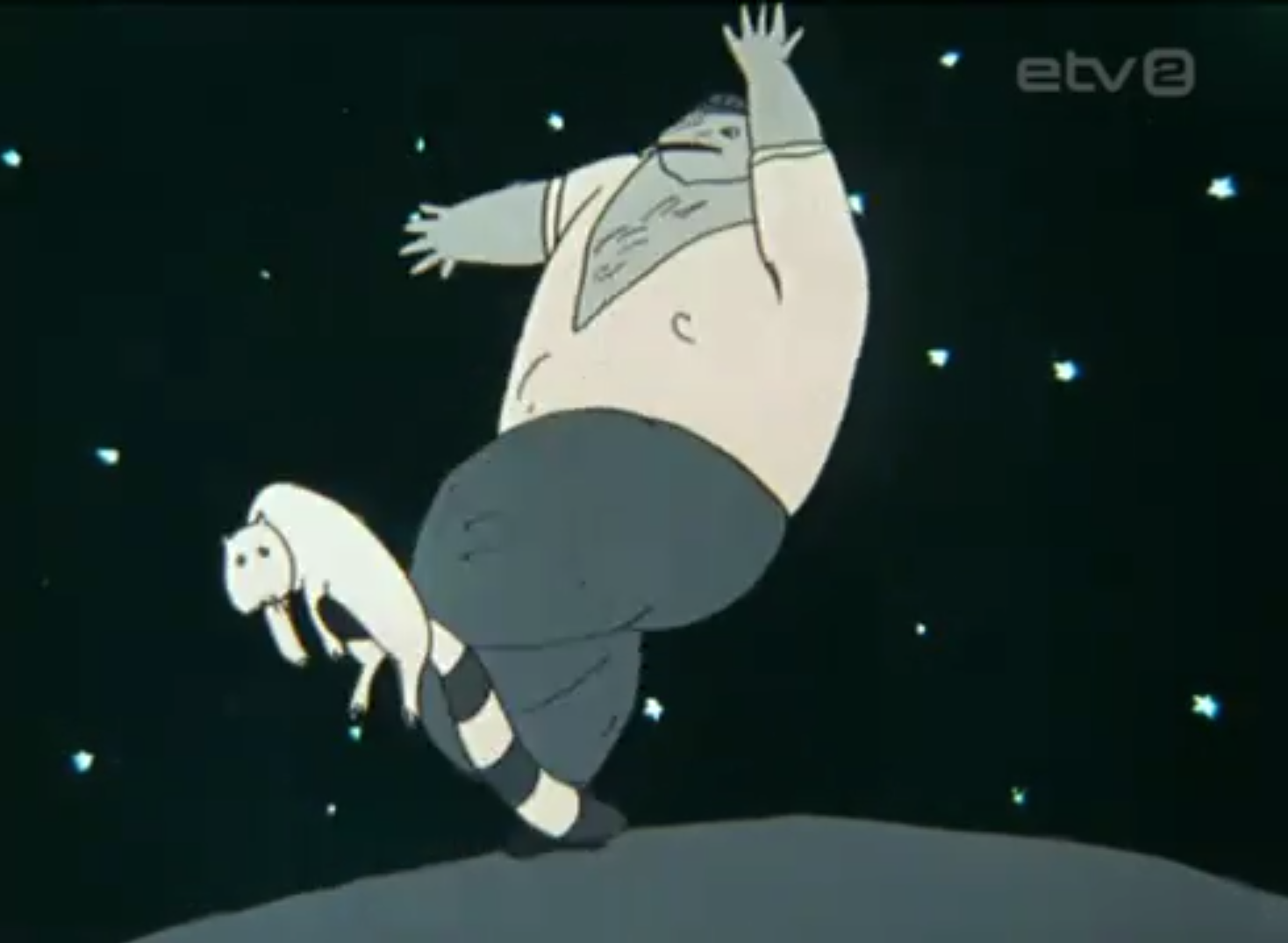
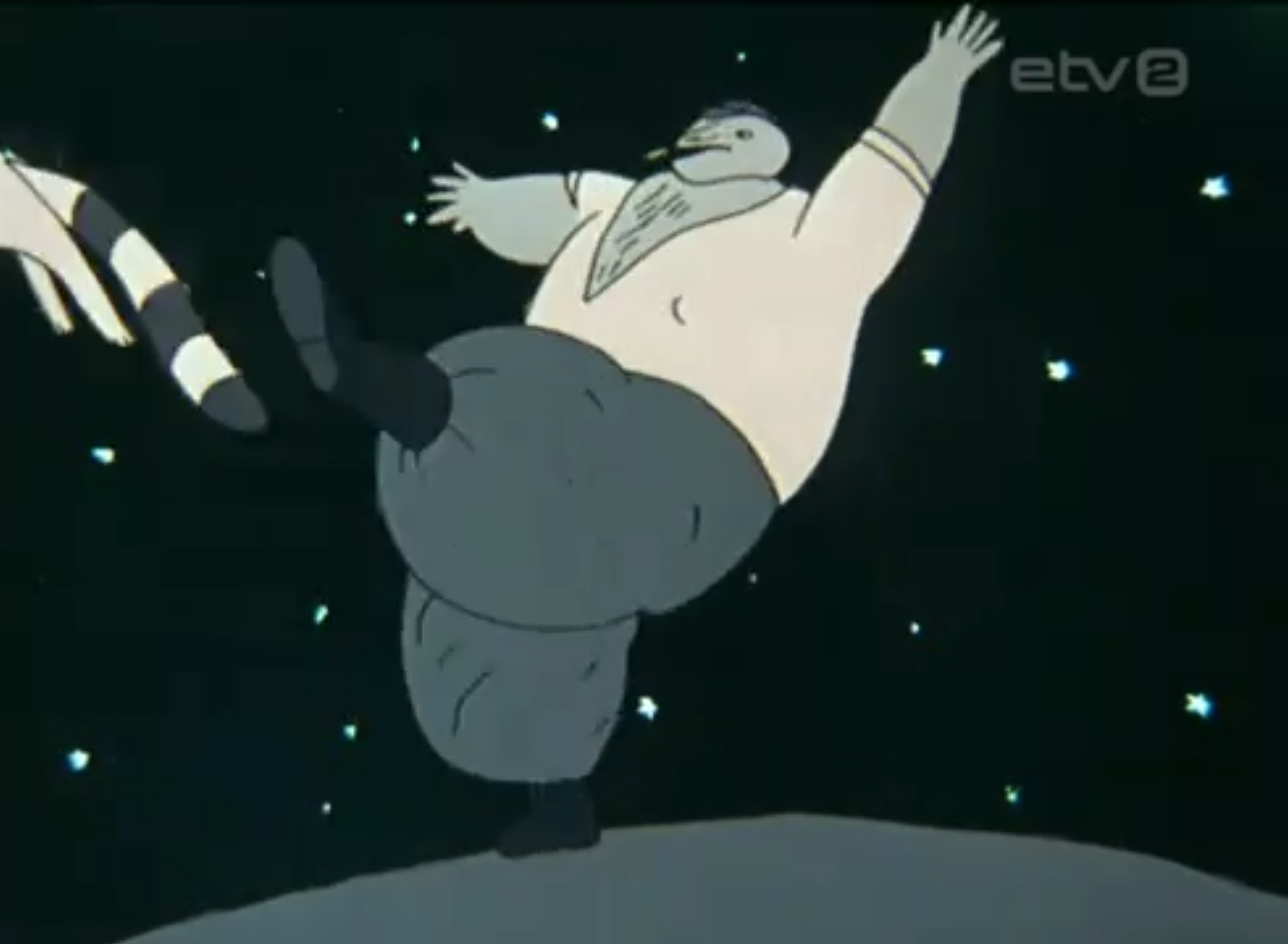

Breakfast on the grass (1987)
That’s the introduction for the movement because if we take all your films, we can see that the movement is not just the classic cartoon movement which is mainly based on elasticity. But there are a lot of different movements. For example a hand comes over a cloth and the cloth comes to the hand instead. Other example: we just have vibrating lines. Other example: the image is static, the shape is static. Or a sachadic movement as we can see in Pilots on the Way Home. Sometimes you use childish jerking movements. Sometimes it is choreography but functioning.
In my teaching, I try to link graphic design to movement, to bring out a kind of movement from a specific graphic design. In a watercolour graphic, you have a different kind of movement than pen lines. In the Beat Bit website, we have the similar idea of the graphic form that creates or produces certain kinds of movement.
In Luna Rossa for example, it is clear that the movement mainly comes from the dramaturgy rather than the texture. How do you decide the kind of movement you will use?
PP: It’s different for every film. The story, which is like the foundations of a building, tells us the character design. Some character designs can have a high level of abstraction, a very high level of stilization. In the first part of Breakfast on the grass, the drawing is very simple and the woman who is losing her face has a very realistic drawing. Movement correlates with the level of stylisation. In classic celluloid animation, drawings are outlined with lines and then coloured within those lines.
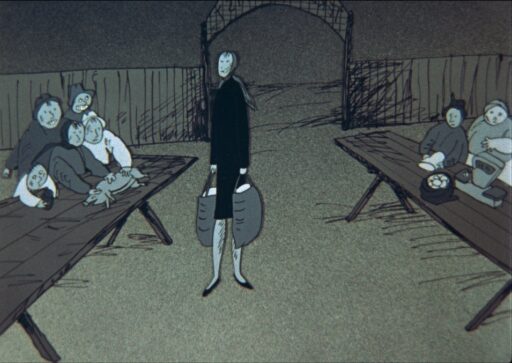
If you’re working with animators and you watch the line test, you have to imagine and the line is dominative. When the color is dominative, we can see spots. Every film has a different approach.
Luna Rossa has a totally different production.If we compare it with, for example, 1895 or Breakfast on the grass.
OP: For example in Life without Gabriella Ferri, a girl named Berta jumps off a bridge at the beginning. When she is standing on the bridge, she is animated correctly, like a still image. But after jumping into the deep water, she starts moving strangely.
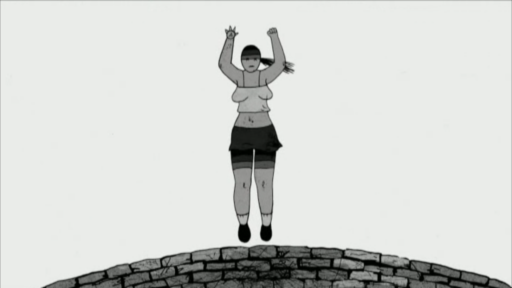
Life without Gabriella Ferri (2008)
GS: Yes, in a disorganised and incoherent manner, with jerky movements.
PP: In Divers in the rain, I animated by myself. I mainly work with animators. I give them layouts but in Life without Gabriella Ferri, I animated this scene with Berta by myself and I didn’t flip the drawings to control the movement. So I drew the girl’s position on the first sheet of paper, then put it away without looking at it. And I drew the next drawing. The first time I did this was for an advertisement. I didn’t look at the previous drawing. There is a movement to be made between position A and position B, and between these two positions, the movement is not linear but chaotic. So it becomes completely crazy, but the spectator is still able to follow what is happening.
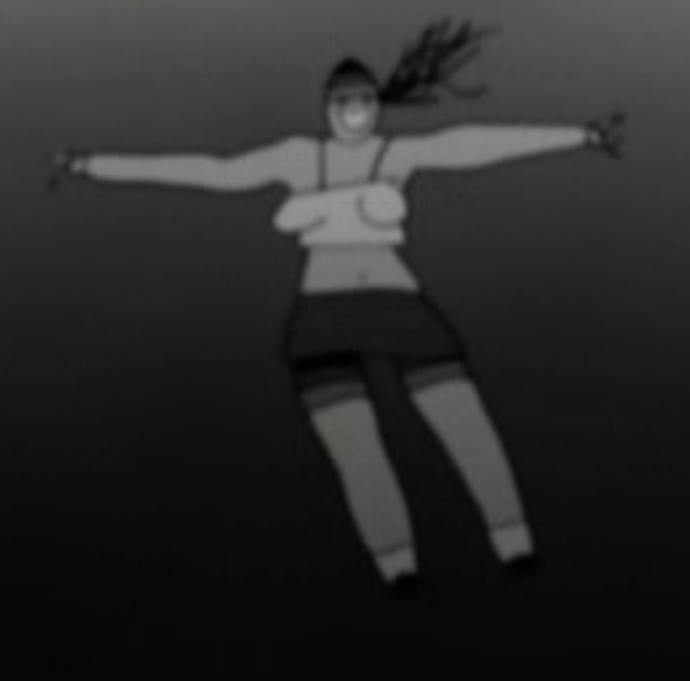
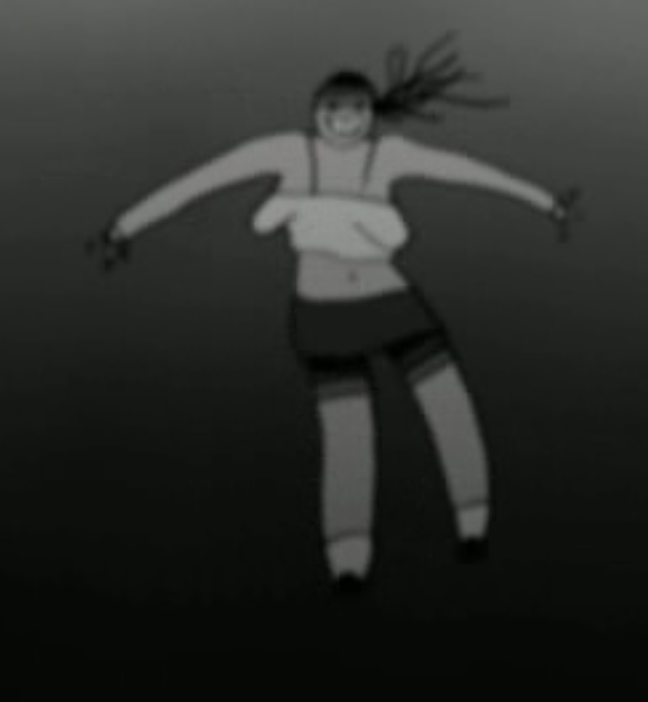
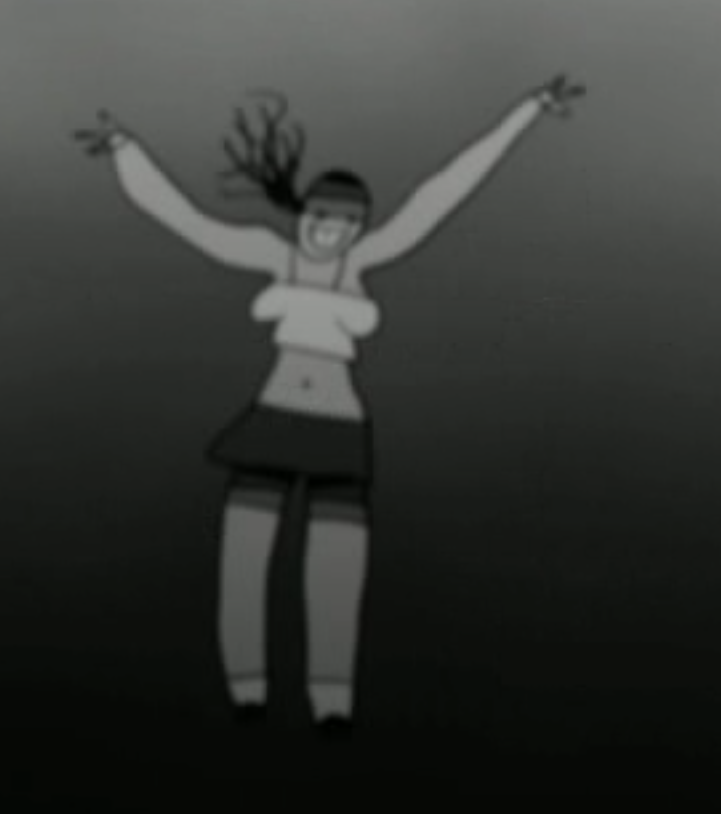
OP: What matters in this type of animation is the spot of colour: your eye always follows the spot. We did an experiment. At Priit’s daughter’s wedding, Maria wore a bright red dress. I took hundreds of photos.
PP: There were maybe 20-25 people who went through the city to a restaurant. The backgrounds are changing all the time.
OP: As Maria wore a red dress, you always see her. Your eyes are following her and the red spot.
In this type of animation, when you colour a moving character or object drawn in such a way that its size cannot be controlled, your eye follows the patch of colour and you always recognise the same character or object.
PP: It may not be very pleasant to watch for half an hour.
OP: In The life without Gabriella Ferri, there is only one character who dances like this. It is the character’s personality. Some people might say, ‘Oh, I know that person, she’s just like my mother!’
GS: It is between an expressive intention and a formal experimentation. It is an intention to express a character with this original way of moving.
OP: This is an example of how animation can be used in a specific way.
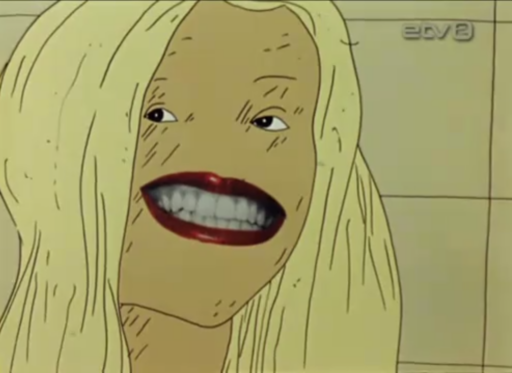
In The triangle, Julia’s face is always changing but you still recognize her, she’s representing all the women in the world.
The triangle (1982).
PP: Her face is changing like a collage. Julia’s body changes, sometimes very slim, sometimes the opposite but the dress and the colors are the same.
Z: In the films you have made previously, depending on the technique, story or narrative, you decided that the characters would evolve in their own way. In Divers in the Rain, the woman moves differently from the men. In ancient Japanese theatre, a code dictates the characters’ reactions in order to express certain moods, and if you don’t know this code because you are unfamiliar with this culture, you cannot understand it.
Your films seem more accessible — for instance, color carries a great deal of expression. Following what we discussed about movement as a kind of code, do you also think of color — or even sound or texture — as codes specific to each character, as if each one were moving through a different dimension?
PP: In animation short films, what we call character is more like a sign: a young man, a fire man, a fat lady… if a character is graphically simplified and stylized, we can call this a code. In The triangle, men and women are typical as family clichés. The man is reading the newspaper, she’s cooking for him…
Why was it interesting to make this film? because we created how it’s happening and it was a lot of fun to make this. The collage, the cut out faces are brutal, it is not realistic. Finally they are not characters.

OP: They are archetypes.
PP: Yes. In Breakfast on the grass, Anna, the poor woman, is gray, without color and she has to serve other people.
OP: In the system.
PP: I draw her in a very simple way. I draw her maybe like 50 or 100 times to work it out. The body is just two lines. She was almost invisible.
Another woman, Bertha, lost her face. It’s quite anatomical, with a lot of lines. We spent much time and energy drawing this woman. She was probably important. She maybe was an artist, She was beautiful. It’s part of the story.
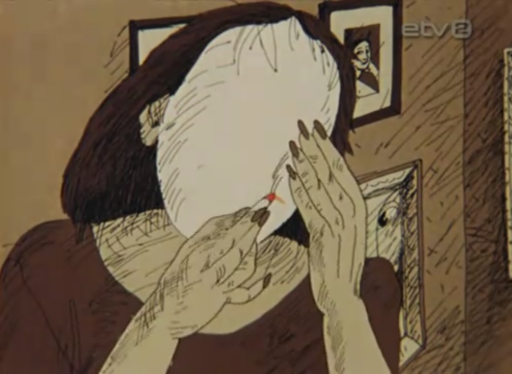
OP: When you start to work out the pattern or the code of a character, it’s connected to the technique of animation and to sound. Because that’s what you want to express.
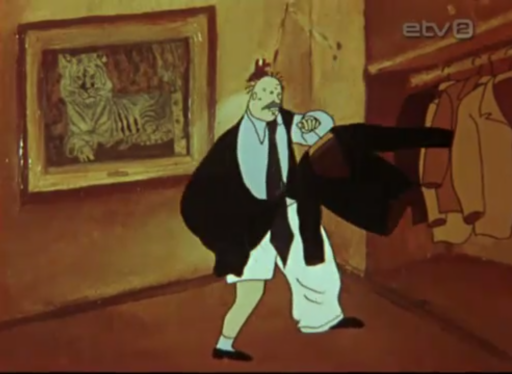
In Breakfast on the grass, the sequence with the painting in the opening sequence, with George, the beautiful man…
PP: He was called George because we tried to find an international name.
OP: He expressed the richness of life before the Soviet Union.
PP: In the Soviet Union, it’s not George, it’s Georgi.
OP: The change in technique and the change in animation style have an impact on the story.
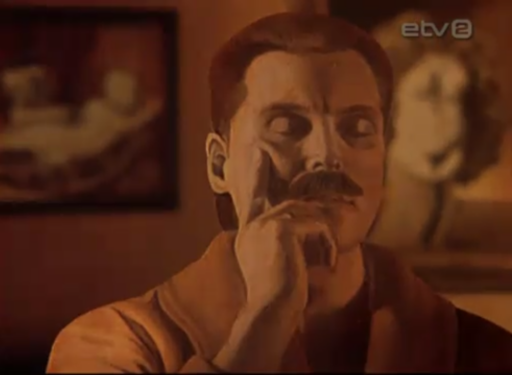
PP: The first version of Breakfast on the grass had only one story. When I started to write I understood that it’s going to be maybe too complicated to understand. Then I came to the idea that there could be four stories. This game also offers all the possibility to use different styles. George, Georgi, is probably very rich, he’s living in a fantastic place with a view to the sea from the window. We shot this sequence with one of the animators. The photographs were handled by Mati Kütt. And it was painted using photographs blown up on the crossover. The music is very classical music and the voices are so beautiful.
When something is happening, this world is destroyed. He had to wear this black jacket and white trousers. His drawing is very simple. He’s flat. And this beautiful world was crushed.
The character design and movements are conceived in a naturalistic way: the beautiful George moves like a normal person anatomically and realistically. And when he is represented with a flat simple drawing, he is very badly animated.
GS: What question would you like us to ask you that we haven’t asked you yet?
PP: Do you want a cup of coffee?