THEORY
MASTERCLASS
WRITING ANIMATION: GEORGES SCHWIZGEBEL
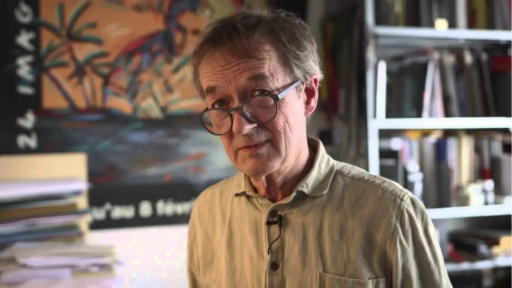
Georges Schwizgebel (photo : CTVM)
Georges Sifianos:How many films have you made so far, Georges?
Georges Schwizgebel: This will be my 22nd, but it’s not finished yet. Since 1974. The first three films I made didn’t receive any support; there was no film funding in Switzerland at the time. That came later. In the 1980s, it was possible to draw up a budget and a proposal and find funding from the Swiss Confederation and television. I made the first three films outside of my working hours, and then it became my main activity until now.
GS: You’ve managed to make a living from your films. That was quite rare when you started out; not many people could make a living from animation.
GSch:Yes, I’ve been lucky.
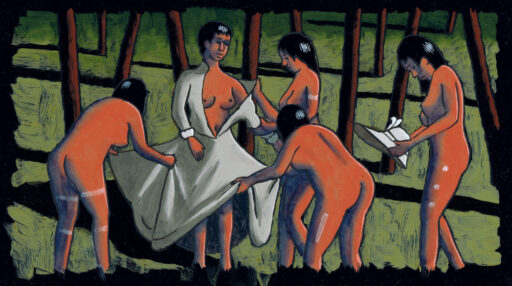
Le journal de Darwin (2020)
GS: My first question is only half serious: your work is hugely successful. Yet it isn’t narrative. In France right now, everyone swears by narrative. Your work could be described as poetic, musical, dance-like, and even experimental. What’s the secret to its success? What’s your recipe in a nutshell?
GSch: I can’t say why people like it. When I make a film, I hope people will like it. But that’s not my motivation. My motivation is to find a visual idea. Sometimes it’s narrative. Quite rarely, it’s true. It depends on the starting point. It could be a novel, so it usually becomes narrative. Or it could be a visual idea or the desire to interpret music through drawing.
I’ve never used dialogue. This creates continuity between my films.
They are described as experimental in China and the United States, as opposed to mainstream films.

Romance (2011)
GS: What do you think appeals to viewers in your films?
GSch:Perhaps it’s the continuity. There are often no cuts. You can really immerse yourself in the images because there’s no dialogue. You’re drawn in as if in a dream, following the logic of dreams where you move from one scene to another without interruption. Maybe that’s what appeals to people.
GS: What is this logic?
GSch:When I make a film based on music, the rhythm and structure of the film are determined by the music. If I make a film based on a visual idea or a narrative, I like to give the animation a rhythm, as in music, and I avoid cuts. These are constraints that I set for myself.
GS: Is this fluidity enough to explain the audience’s enthusiasm?
GSch:Not everyone is enthusiastic. One of my films was shown in the United States because of the Oscar lobbying strategy. Usually, it’s mainly those who liked the film who come and talk to me, but in this case I heard the opinions of lots of people, and many said they didn’t understand it at all.
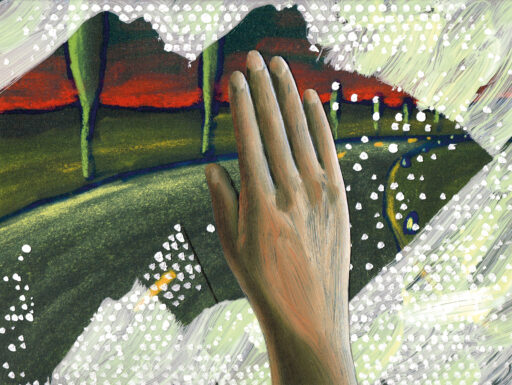
Retouches (2008)
GS: Can you recall any other negative reviews?
GSch: There was some negative feedback for one of my early films, the third one I directed, Hors jeu. It was at the Annecy festival. The film is made up of different cycles. It was a bit long, around 7 to 8 minutes, and it wasn’t selected for competition. I thought they were wrong. It was such a magnificent film. I had just made it, so I didn’t have an opinion on it yet. It was shown at 11 p.m., during a non-competitive screening, when people had eaten well and had a few drinks. And after a few minutes, they started throwing paper airplanes in front of the screen. And I realized that my film was too long. I cut a minute and a half to keep only 6 minutes.
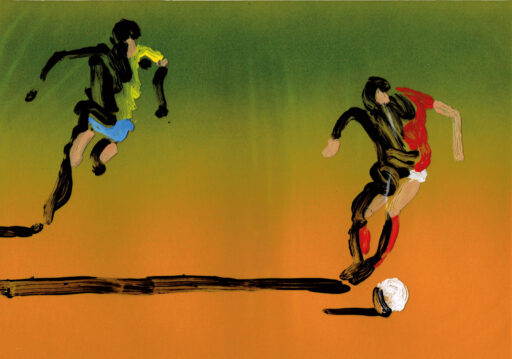
Hors-jeu (1977)
Ethann Néon: The paper airplanes in Annecy are not necessarily a sign that the film is not appreciated.
GSch: No, but in this case, it was obvious that it wasn’t applause.
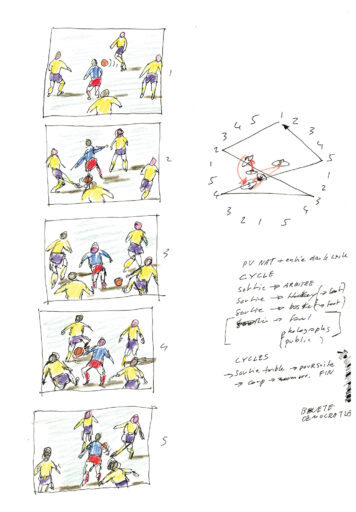
Story board de Hors-jeu (extrait de Filmonographie 1974-2020)
William Henne: The constraint of fluidity allows for the implementation of a rather specific principle of animation, that of metamorphosis and metaphor, because there is an identification between the transformed object and the transforming object. This is evident in D’une peinture… à l’autre where formal links have been established between two paintings and sometimes between two different pictorial universes. There are thematic links with transitions in the form of camera movements over a painting to arrive at another part of that painting, perform a transformation, and move on to another painting. This is where, in general, your films touch on the specificity of animation. And when you mention music, sound is fully taken into account in its cinematic dimension.

Le sujet du tableau (1989)
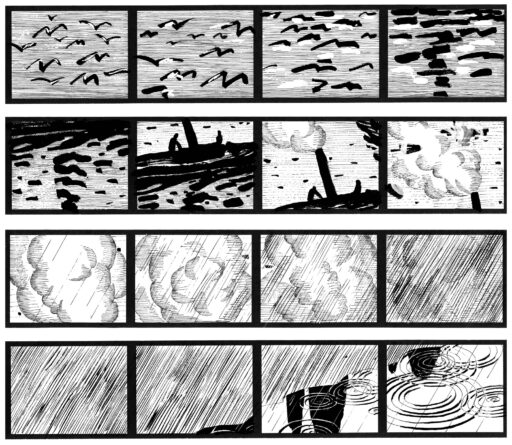
Story board of Le sujet du tableau (extrait de Filmonographie 1974-2020)
GSch: I once made a film with cuts because it was narrative, Le sujet du tableau. When I wrote the screenplay, in which everything that happens is explained, it was very clear. It’s the story of an old man who is rejuvenated in a portrait painted by an artist. He then travels from one painting to another in search of Marguerite. But when you watch the film, you don’t understand the story at all. Neither did I, for that matter. And I wanted the next film to be understood. It’s an adaptation of a Chinese fable, L’année du daim. And there, I clearly made cuts between scenes. The film is divided into four parts. You can see the progression because the rhythm is the same in each cut. I wrote a script, but I didn’t give any explanations, just the images, to see if people would understand. And indeed, the film is very understandable. It’s easier when you make cuts. It’s a more classic style of film editing. It’s the only film I’ve made this way. However, Le Sujet du tableau, this half-successful film, still gave rise to two other films, La Course à l’abîme and Retouches.
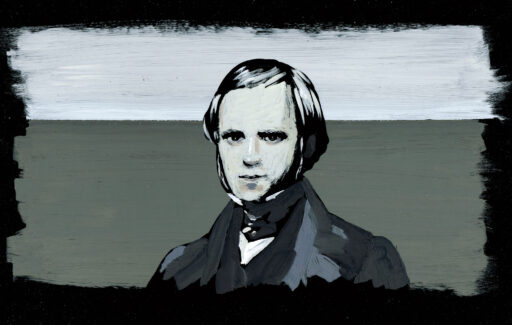
Le journal de Darwin (2020)
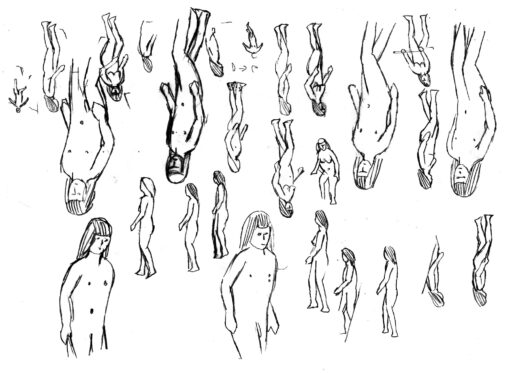
Dessin préparatoire pour Le journal de Darwin
(extrait de Filmonographie 1974-2020)
In one of the recent films, Le journal de Darwin, natives return to their country by boat after being kidnapped for three years and tell Darwin what happened. Their story is a long, uncut black-and-white shot. But once they arrived home, I edited it in a more traditional way with cuts.
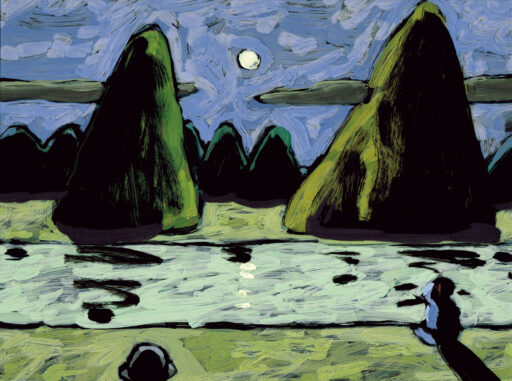
WH: Indeed, in another fairly narrative film like L’homme sans ombre, we can see this constant search for transitions between scenes. Even in very narrative films, we find the fundamental principles of animation with these movements and metamorphoses.
L’homme sans ombre (2004)
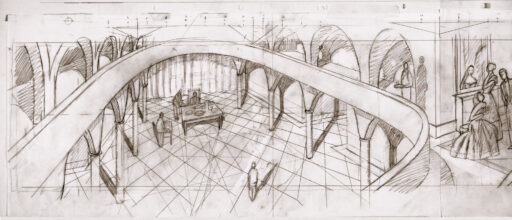
GSch: Yes, that’s what was specific to animation before digital technology and special effects. It was movement in space, because in live action filming it was complicated; you needed a crane and a lot of equipment. The same went for transformations and cycles.
Even though we can now do all that with computers, I’ve continued to work in the traditional way. Partly because I don’t know how to use a computer. But mainly to implement these processes specific to animation, to move from one shot to another without cuts.
Preparatory drawing for L’homme sans ombre
(excerpt from Filmonographie 1974-2020)
GS : It reminds me of Eisenstein’s theory, which is the opposite of this fluidity, but seeks to find another form of fluidity. He believes that meaning comes from conflict and tries to put all the elements in conflict: the shots, their duration, the lighting, the composition within the shots, and so on.
Generally speaking, you champion the hypnotic effect of cinema.
EN : In D’une peinture… à l’autre, and in several of your films, there are many pictorial references and many works of art in general. The paintings obviously existed before. How, in the process of writing D’une peinture… à l’autre, did you decide on the order of the paintings in the script and storyboard? Was the order determined by visual or narrative elements?

La Blanche et la Noire de Félix Vallotton
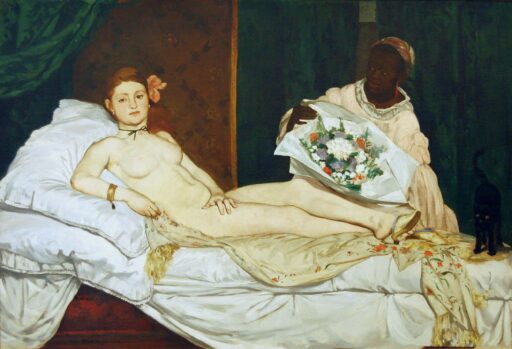
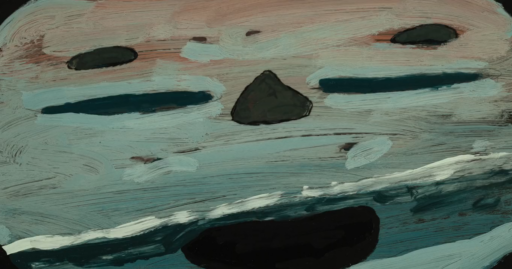
GSch : Initially, I wanted to make a film based on this piece of music that I had heard and really liked [Editor’s note: Danza de la Paloma Enamorada by Atahualpa Yupanqui (1954), performed here by Roberto Aussel]. The music is divided into two parts. I didn’t want to tell a story at all, I just wanted to put images that I liked to this music. I quickly thought of these two paintings, which are on the same subject, painted 50 years apart. So Olympia by Édouard Manet and La Blanche et la Noire by Félix Vallotton. I looked at the other images I had chosen because I liked them. I thought to myself that no one would understand anything. What does this film mean? And I decided that I was going to include paintings with people of color, like in Olympia, where there is a servant. And, with a few exceptions, I included 19th-century paintings with Olympia and 20th-century paintings with Vallotton’s painting. We see people of color, and they are on the same level as in his painting, where the African woman is not a servant but rather his companion. I grouped these 19th-century and 20th-century paintings together and added images of things I drew. Whether people understand it or not, I emphasized the difference between these two paintings from a sociological point of view.
Olympia d’Édouard Manet
EN : What was the main criterion for determining the order?
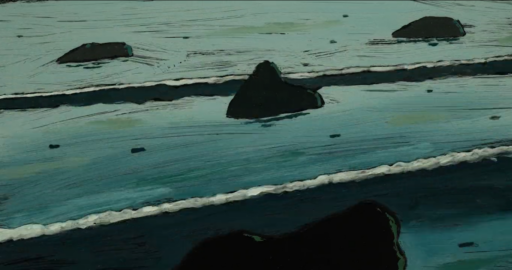
GSch :The question was mainly about how to transition from one painting to another. It wasn’t dictated by the logic of the theme, namely the social conditions of people of color. Visually, it was more obvious to move from the reflections in the water in one painting to another. The music induces regular transitions, then suddenly longer ones.
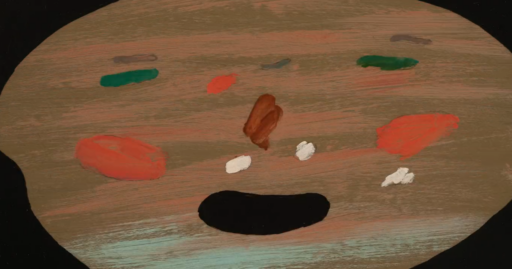
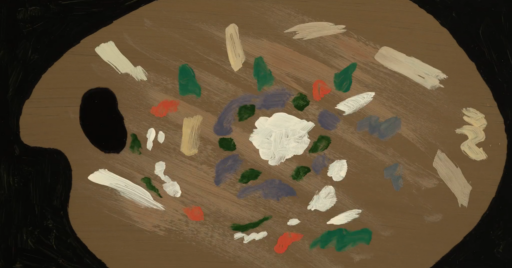
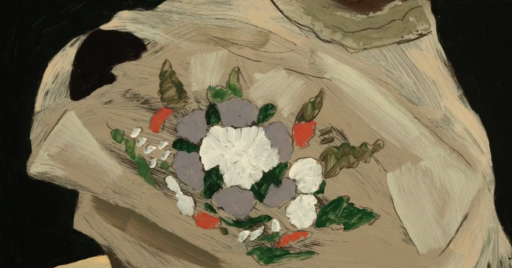
WH : Some transitions may seem arbitrary and purely formal, but others are very meaningful. At one point, rocks half submerged in the waves are arbitrarily transformed, through a kind of morphing, into a painter’s palette, and this palette becomes the bouquet of flowers held by Olympia’s maid. It is obvious that the bouquet of flowers she is holding is also the painter’s palette, since a bouquet of flowers is also a collection of splashes of color, as if Manet were establishing a metaphor between the painter’s palette and the bouquet of flowers.

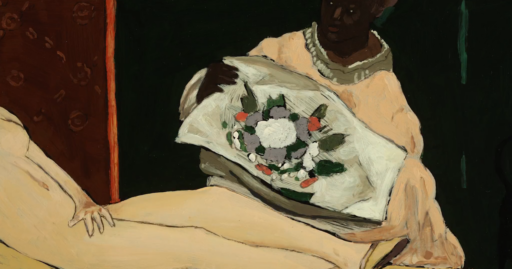
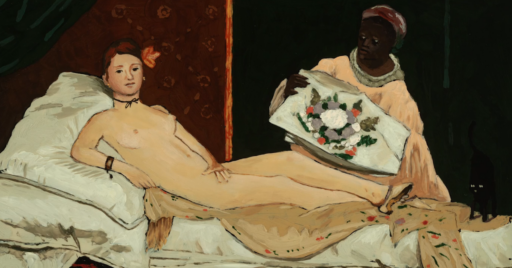
D’une peinture… à l’autre (2023)
GSch :These are ideas that come up while working. I didn’t think of that right away. The film is largely constructed as you go along. Since I work alone, it’s an advantage to be able to build the film little by little.
WH : Yes, it allows you to surprise yourself and not get bored.
GSch :Otherwise, you have to be able to explain to other people what you want to do, which is less obvious.
GS : Can you tell us about your work process? What are the first steps? How do you build the film? Do you throw things away or do you keep everything?
GSch :I spend a lot of time on the stage called the line test. I have an old device that allows me to see the entire film, but only with sketches. I spend a good year changing and correcting drawings, either with or without music. I do line tests before I do the storyboard so that I have a clearer idea of what I’m going to tell when I submit my application to the institutions.
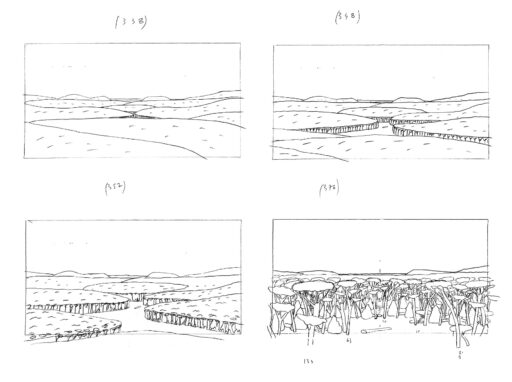
Line test pour Le journal de Darwin
(extrait de Filmonographie 1974-2020)
Once it’s ready, I don’t throw much away because it takes a long time to animate and then paint. To give an example, in La jeune fille et les nuages (The girl and the clouds), the idea came to me when we moved our studio. We’re on the 13th floor, and I could see beautiful sunsets and clouds. I wanted to make a film about changing clouds. I thought it might be boring.
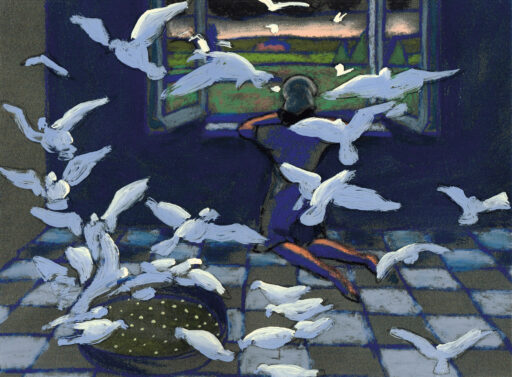
La jeune fille et les nuages (2000)
And I read Jacques Roubaud’s book, Ciel et terre et ciel et terre, et ciel (Sky and Earth and sky and Earth, and sky). It tells the story of an elderly man who, as a child, had been hidden in an attic during the last war because of his Jewish origins. All he could see from the skylight were clouds. Much later, in London, he visits an exhibition at the Tate Gallery of cloud studies by Constable, and it reminds him of his childhood. That gave me the idea of telling a story with clouds that act as punctuation marks to move from one shot to another. I’m not retelling the story from Jacques Roubaud’s book, but the form I gave to the film came from that book.
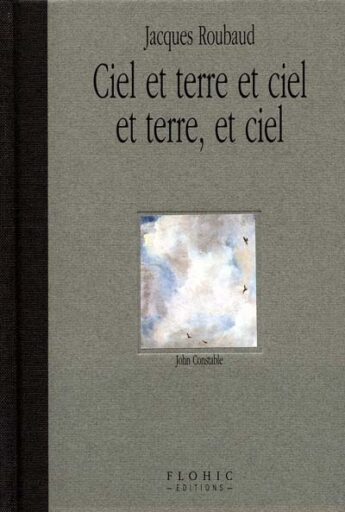
Ciel et terre et ciel et terre, et ciel, Jacques Roubaud (1997)
GS : From the beginning, your graphic universe has consisted of a dark background on which you work with brighter colors. Do you remember making that choice?
GSch :That choice was perhaps a little naive: I thought that in cinema, the background is black and the light comes from above, unlike a white sheet of paper on which we write. Hence the splashes of color on a black background. I sometimes used a blue background or a fairly dark color. It’s true, I’ve always used acrylic paint, which is slightly transparent, and when you put it on a colored background or a black background, it brings everything together.
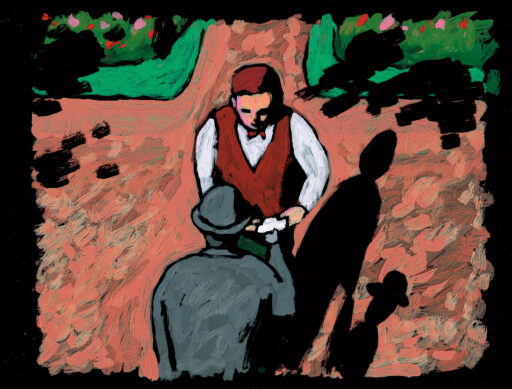
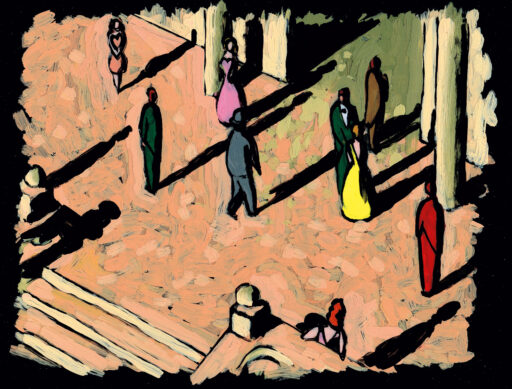
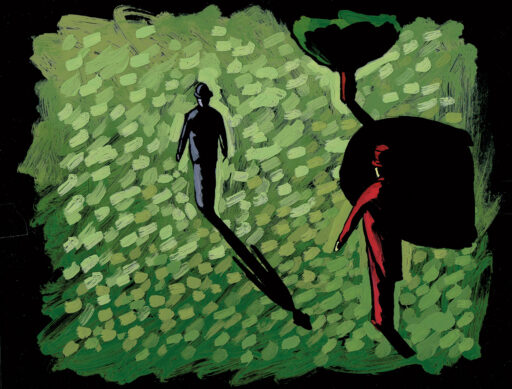
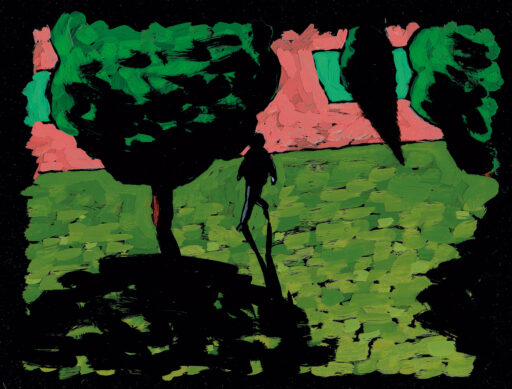
L’homme sans ombre (2004)
Zepe : What appeals to viewers, of course, are the camera movements and unique perspectives, but I also think it’s the subject matter. I wondered why the subject matter is so appealing. I remember a festival poster with a man writing on a table.
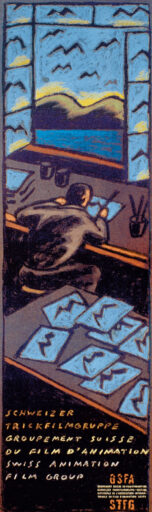
Affiche pour le GSFA (Groupement Suisse du Film d’animation), 1993
In films, the black on which you paint, and which Georges Sifianos talked about, gives color a physicality when we see it moving on screen.
I don’t think, as was said earlier, that these films, with their transitions from one scene to another, follow the logic of dreams, because the magic of these transitions does not come from the fact that, as in dreams, we move from one place to another, but from the fact that these transitions take place through matter.
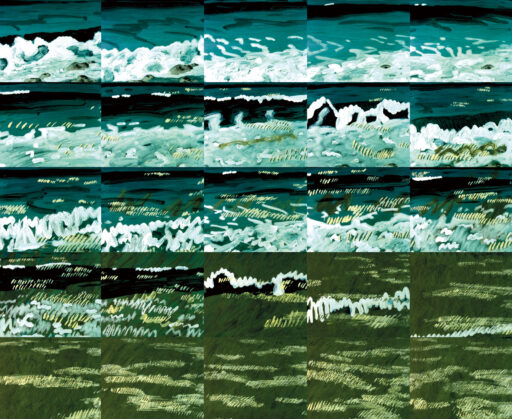
Séquence extraite du Sujet du tableau (1989)
Georges Sifianos evoked Eisenstein with his counterpoints and contrasts between shots. He made very poetic short films before we knew him, with transformations that were closer to dreams than to the theorizing he did later on. What is important is that when he talks about shots, as Georges Sifianos mentioned, he is talking about the metrics of the shot, he is talking about editing, but also about the internal rhythm of each shot. He talks about the vibration of matter and the changes within each shot. If the background behind the characters consists of undulating water, the rhythm is faster than if there were, for example, a grid. He takes into account the density specific to the rhythm. And in your films, the viewer is not only caught up in the flow of images, but also in the material.
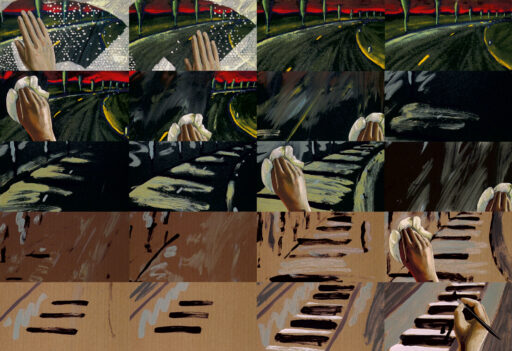
Séquence extraite de Retouches (2008)
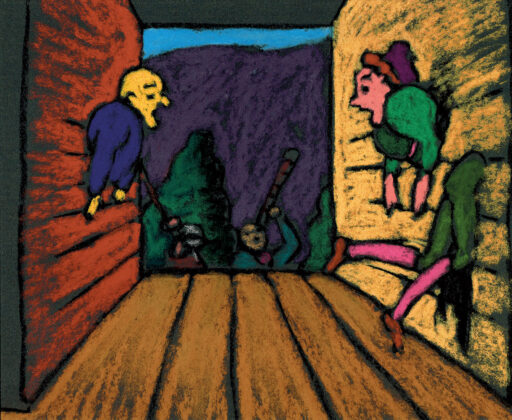
GSch :The poster was created for the Swiss Animation Film Group, and it was the first time I had used pastels on sandpaper, which requires a lot of color because it catches the pigment. I used uniform anthracite sandpaper. I then used this technique in a few films for the sets.
It may not look like it, but sandpaper is transparent, so you can see through it with a light table if you darken the room. This allows you to transfer the drawings for animation. I used it a little in La jeune fille et les nuages, a lot in Fugue, and entirely in Zig zag.
Zig Zag (1996)
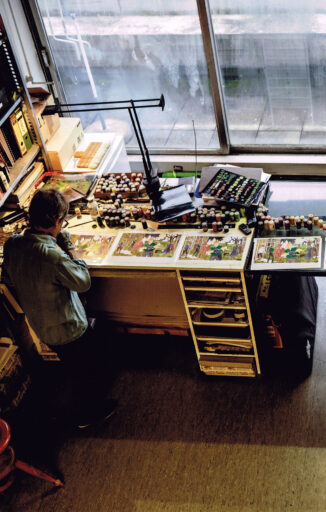
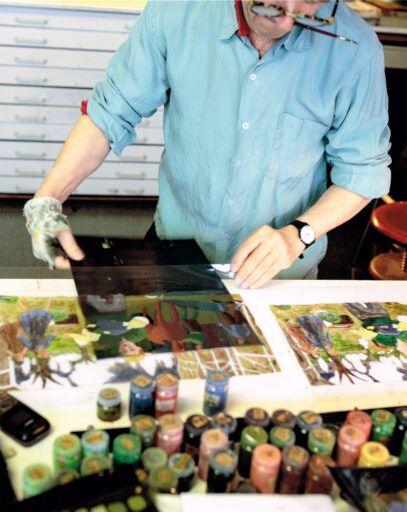
Otherwise, the material of my films is more like acrylic paint on acetate.
Photos : Cécilia Menge, 2015
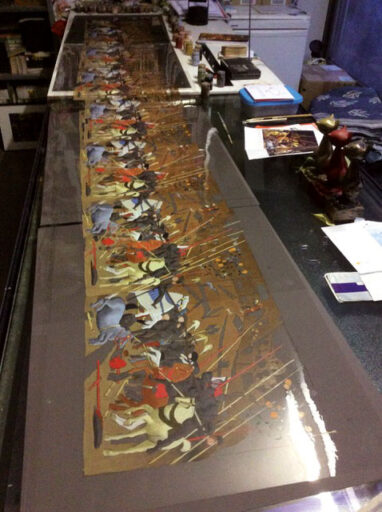
Photo : Georges Schwizgebel, 2017
WH : To echo what Zepe says, there are transformations that are indeed geometric or involve patterns that are graphically associated. But also, at certain moments, the material and color allow the forms to be diluted and brought towards other patterns, passing through non-figurative drawings.
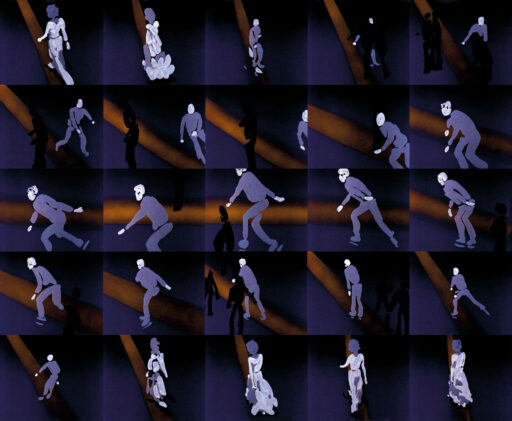
Séquence extraite de Perspectives (1975)
GSch :Yes. I also like each image to stand on its own, but sometimes that’s difficult when there’s movement in space or simply a tracking shot. It works when you watch the movement. But if you just take a single frame, it might not be interesting. However, I like to show the drawings from the films and then exhibit or sell them.
I also like high-angle shots, as they provide more information on screen. If a character is filmed from above, you can see their shadow, more details, their location.
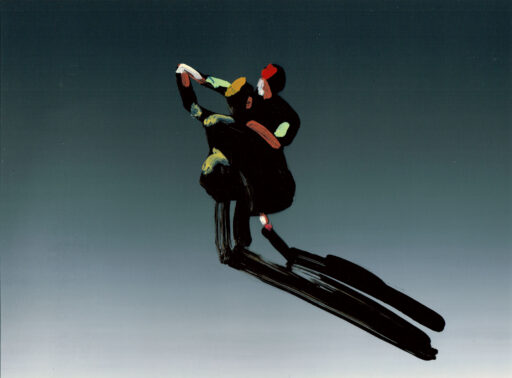
78 tours (1975)
GS : In Hollywood films, for example, any vibration is banned. In your films, the vibrations of the paint, the traces left by the brushes, are organized in different ways. Sometimes you pause, freeze the image. Sometimes the vibration pulsates more quickly and vividly. Sometimes the animation moves in jerks, every four or six frames. It’s an approach that is both musical and choreographic.
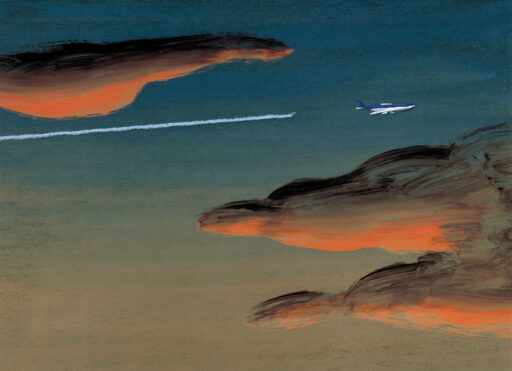
La jeune fille et les nuages (2000)
GSch :For example, in the film La jeune fille et les nuages, the backgrounds move at a rate of 16 frames of the same painting per 16 frames of the next painting, while the rhythm of the music (tempo 90) and the animation overlay are normal (2 frames per 2 frames). I often use sound rhythms to create these movements. In La course à l’abîme (The race to the abyss), I made two-part backgrounds, one part where you mainly see the background, the sky and the ground, which I wanted to avoid making vibrate. So I made 16 different paintings that you could call backgrounds. On top of that was the animation, 144 paintings. But to move the backgrounds, I again used the rhythm of the music, tempo 160, 9 frames by 9 frames, so that it moves in time with the music. So it’s deliberate. It’s not a flaw. In this film, the animation is 1 frame by 1 frame, so 24 different frames per second.
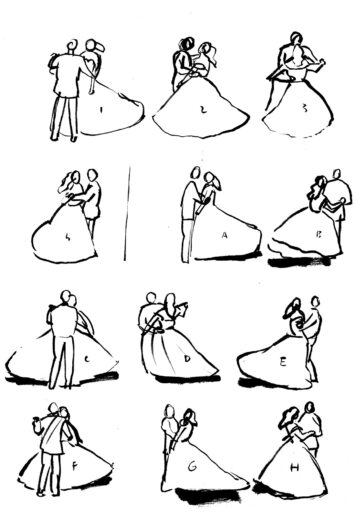
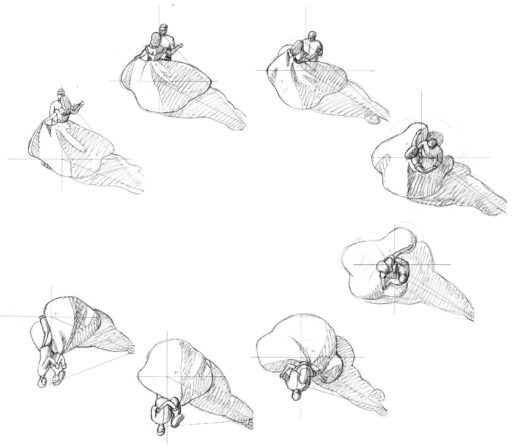
Dessins préparatoires et line test pour La jeune fille et les nuages
(extrait de Filmonographie 1974-2020)
GS : Why avoid this vibration at times? Why seek it out at other times?
GSch :In general, there is always vibration, except when the set remains on screen a little longer, as in La jeune fille et les nuages. When there is movement in space, the entire set is redrawn. Vibrations are inevitable.
GS : Sometimes the vibrations are gentler, and sometimes they are very abrupt. In La course à l’abîme, the characters are very smooth. I can’t remember which films have the most intense vibrations.
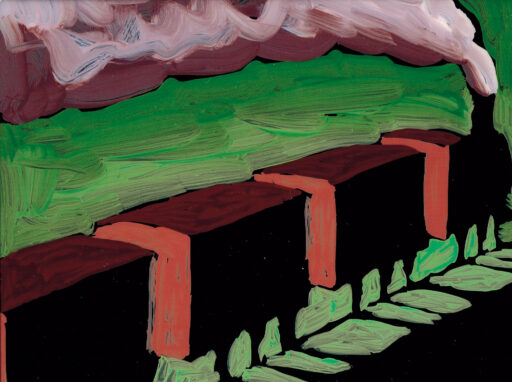
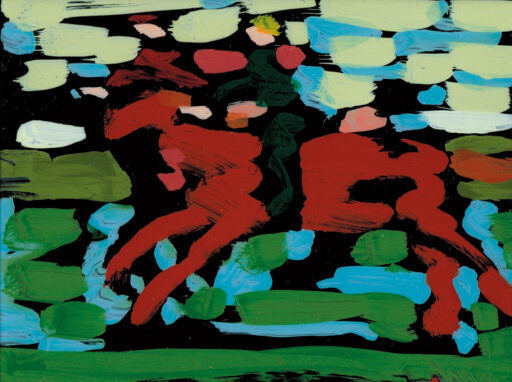
La course à l’abîme (1992)
GSch : In L’homme sans ombre (The man without a shadow), I wanted to imitate the effect of images painted directly under the camera, as in the films of Florence Miailhe or Alexander Petrov, where you can see traces of previous brushstrokes on part of the animated image. I like to control everything before making the film and not improvise as you would when working directly under the camera. That requires a lot of experience, and in L’homme sans ombre, I did a first painting. Then I superimposed another cello and only changed what needed to move. So most of the time, there are about six drawings superimposed.
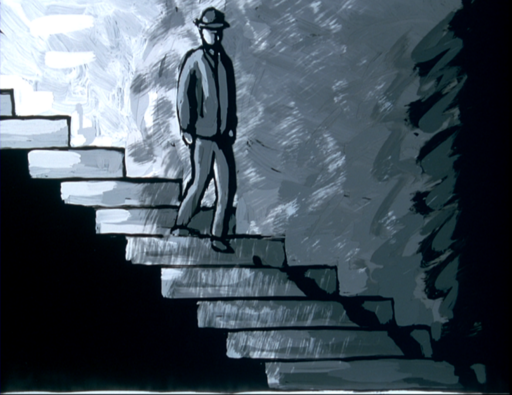
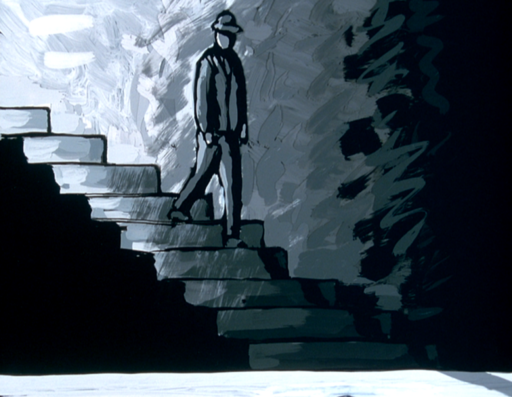
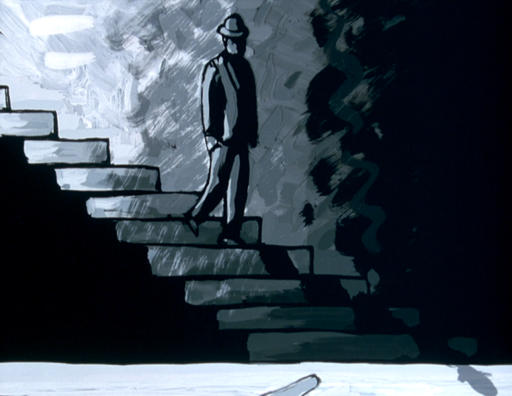
L’homme sans ombre (2004)
GS : It’s a way of setting painting to music, that is, giving it different rhythms, different tensions, and so on. Is this conscious?
GSch :When I make large drawings, when you look at them from a distance, they vibrate a little. When you’re up close, at 12 frames per second, they vibrate a lot. It also depends on the subject. If there is a flat surface, there will be less vibration than if there is a lot going on. On the contrary, if there are elements that move, we see the movement of these elements more than the vibrations, in the sense that the vibration is more obvious and visible in a more static scene.
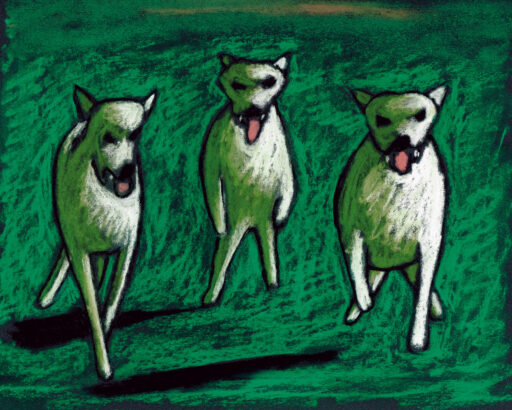
L’année du daim (1995)
EN : I was wondering when these camera movements were made. Some films can be summed up as a large animated picture in which you move around before a big zoom out reveals the whole picture. How was all this planned in advance during the writing stage? Has it evolved in line with current techniques and technologies compared to what was available in 1974?
GSch :In the film Le sujet du tableau, at one point we see grass moving, trees swaying in the wind, and birds in the sky. I simply created a one-and-a-half-second animation and then moved the camera in a spiral from the wheat field to the trees and the sky.
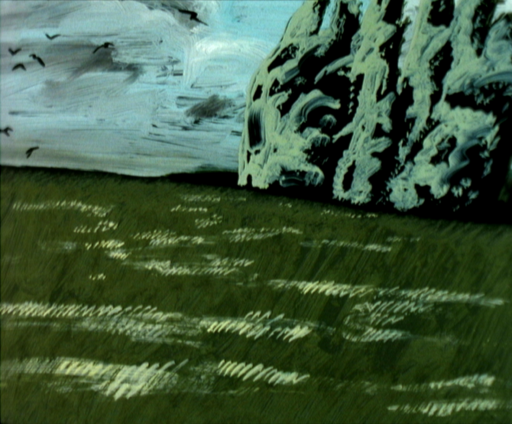
Le sujet du tableau (1989)
That’s what gave me the idea for La course à l’abîme. It’s a very large drawing divided into 36 rectangles, and you move in a spiral from one square to another. But the square itself also moves, so you don’t see that you’re moving from one square to another; it transforms, and every six seconds, you’re in a different place. So, throughout the journey, you can’t see that it’s a cycle. And when you step back and see the whole thing, you may or may not understand that it’s an image that repeats itself every six seconds, or 144 drawings. You see the beginning and the end of the film at the same time.
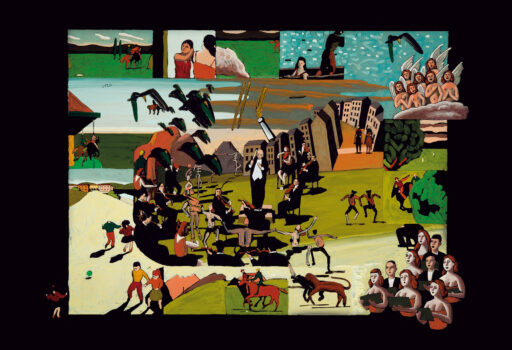
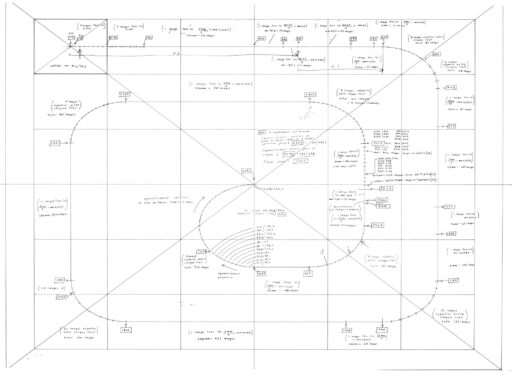
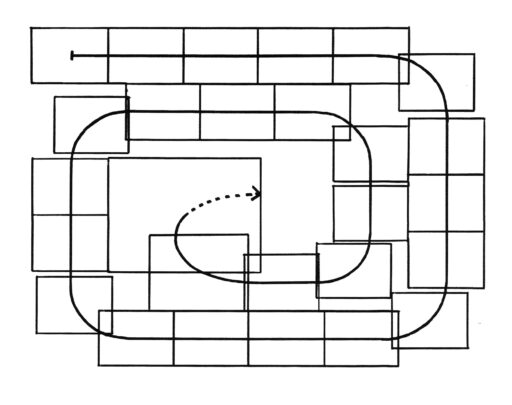
La course à l’abîme (1992, excerpt from Filmonographie 1974-2020)
I reused the process 14 years later in the film Jeu, also with large drawings divided into only nine parts. The idea is that when you finish the spiral and step back to see the whole, that whole itself is one-ninth of another cycle, and so on. I made nine different cycles to music by Prokofiev. The rhythm of the music corresponds to a tempo of 160. This corresponds to 4 x 9 = 36. That’s why I made cycles of 36 images, which respond to the rhythm of the music.
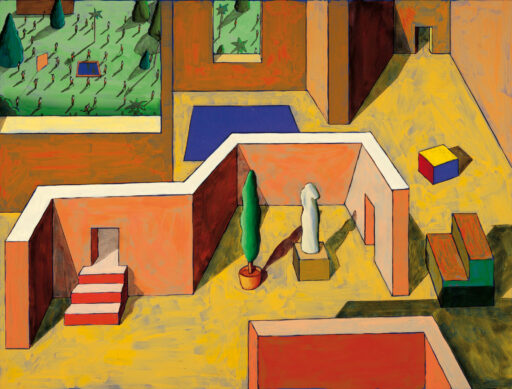
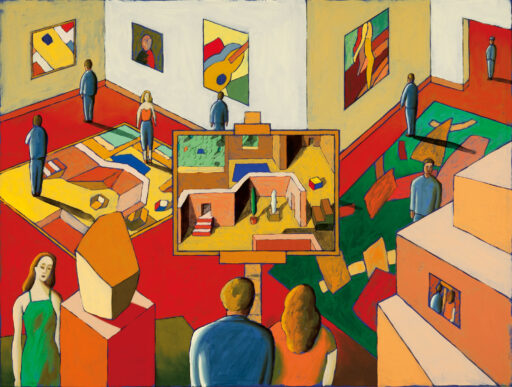
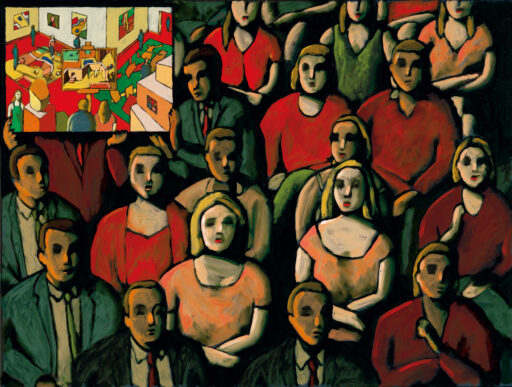
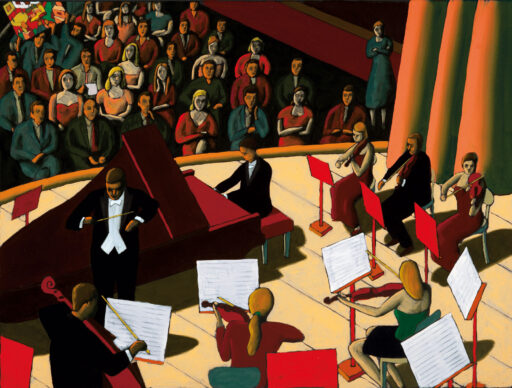
Jeu (2006)
The music never matches the image exactly because it wasn’t a computer playing it, and sometimes I have to double or delete an image to stay in sync. While doing this, I thought I could do the same thing but in reverse. So at the end of the film, you see the same animation but in reverse order. I didn’t think of that at first. I thought of it later when I was filming.
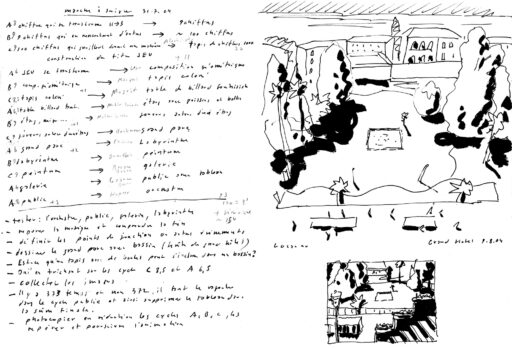
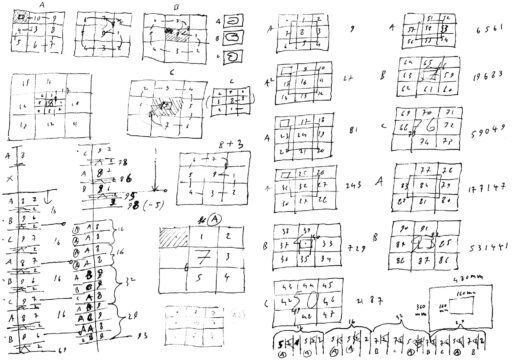
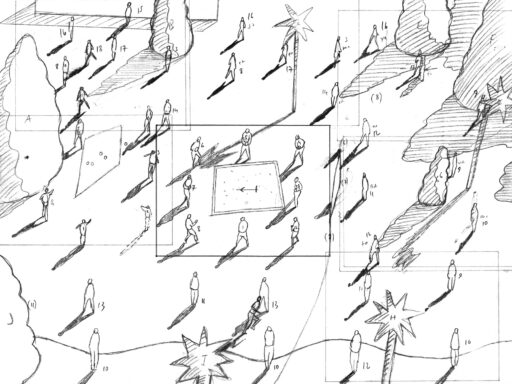
Schémas et dessins préparatoires pour Jeu
(extrait de Filmonographie 1974-2020)
I also used this technique in Le roi des Aulnes (The Erl-King). At the beginning, there is a cycle of galloping horses, we zoom in on one of the horses and the film continues like a classic animation. And, at the end, we zoom out and come to another cycle that corresponds to the end of the film. So, it’s the opposite. We start with a small image and then arrive at the whole, and the film ends with a second cycle.
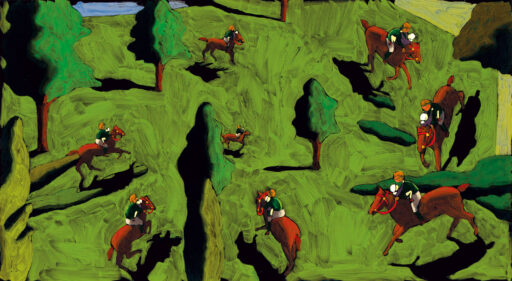
Le roi des Aulnes (2015)
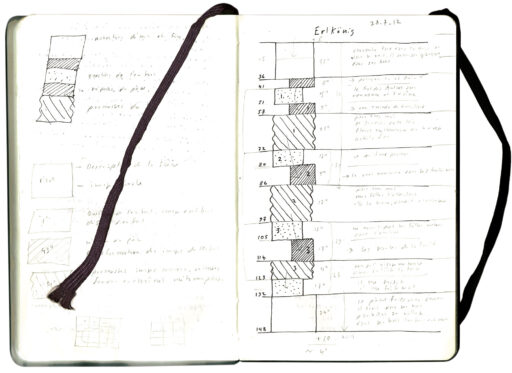
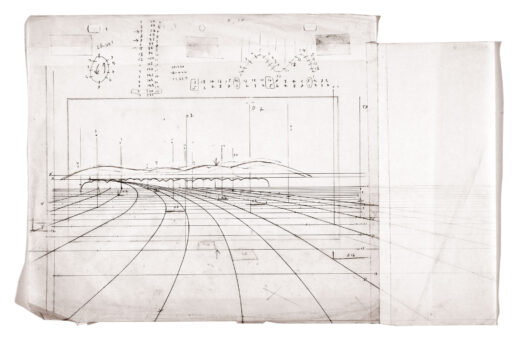
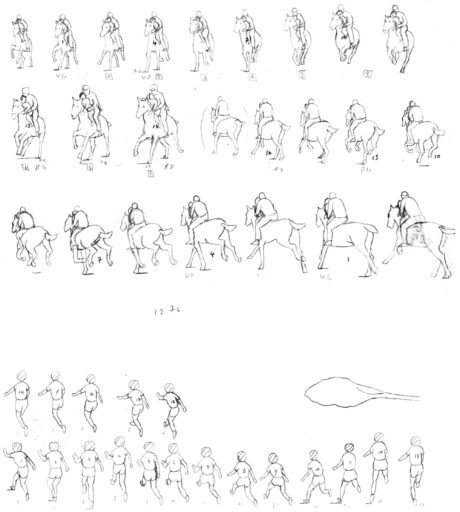
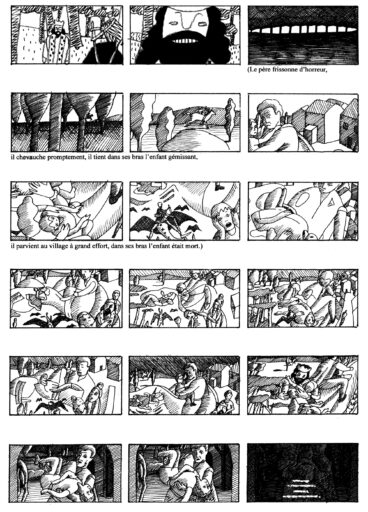
Preparatory drawings, animation, and storyboard for Le roi des Aulnes
(excerpt from Filmonographie 1974-2020)
Obsessed with this idea of movement on a cycle, I also made another film based on Paolo Uccello’s painting, La bataille de San Romano (The Battle of San Romano). Unlike La course à l’abîme, for which I only had the music and this visual idea, I started with an existing image with the idea of destroying it and rebuilding it by creating a spiral inside it. There are also only 36 drawings, but they are large, and the music was composed afterwards by Judith Gruber-Stitzer.
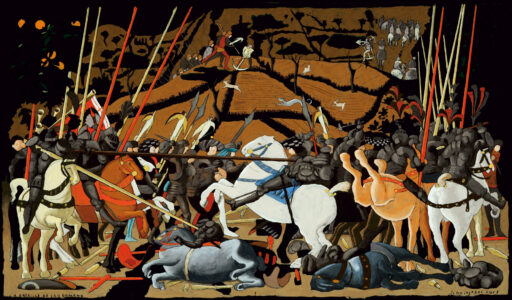
La bataille de San Romano (2020)
In Le portrait de Dorian Gray (The Picture of Dorian Gray), two different cycles tell a story. And I had this idea before I had a script. So I needed a story that was divided into two parts. In the first cycle, there is an image that is common to the other cycle, which is very different. This means that we move from one cycle to the other without realizing it. The dominant color is different, but we don’t know when the transition takes place. There’s the bright side of this young man who looks so handsome and innocent. And the other side that readers of the book know about, which explains why he stays young.
I think I’m going to stop with this idea of shifting cycles; this will be the last one I do like this.
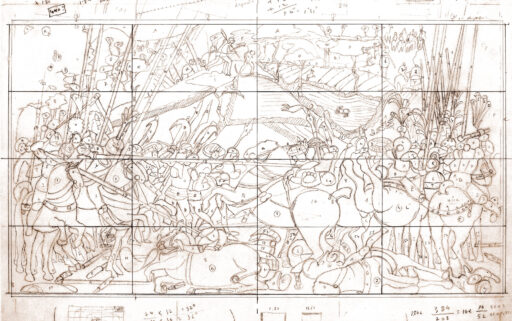
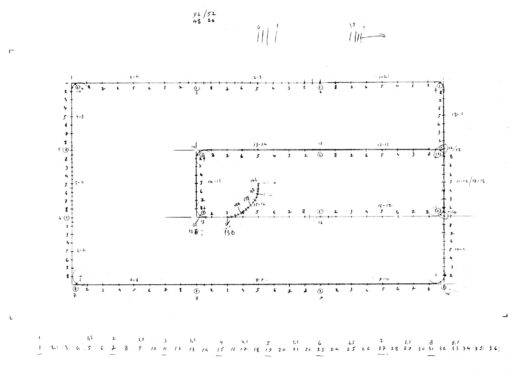
Preparatory drawings for La bataille de San Romano
(excerpt from Filmonographie 1974-2020)
Z : I really like La bataille de San Romano. It’s one of my favorite films that you’ve made, and I can watch it over and over again.
There’s a very powerful effect when pieces of objects move in one direction in an anamorphic way and then reverse to return to their origin. It reminds me of Étienne-Jules Marey’s photographs. When you photograph a bird, for example, in some individual frames you can no longer recognize the object because it’s so distorted. It becomes a shape. You use this method of atomizing objects. The painting brings together all these objects in a single image in specific positions, which, in space, are very different from one another if you change their position. Like particles that make up a painting. This contributes to the very powerful hypnotic effect that you have exploited so well in the film.
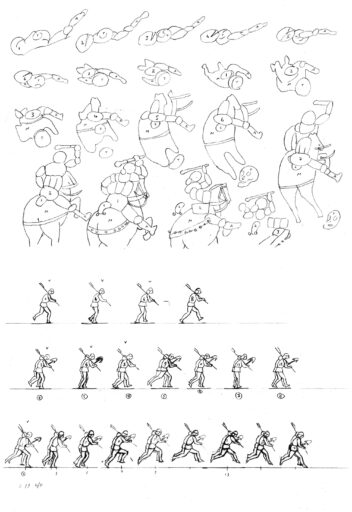
Animation for La bataille de San Romano
(excerpt from Filmonographie 1974-2020)
GSch :It’s also one of my favorite films. Well, I was greatly helped by this magnificent painting. I bought a large reproduction of the painting when I was in my twenties and went to Florence with the Fine Arts school. I’m happy with the result of the film and the music too.
Z : You might find this absurd, but Gil Alkabetz’s film, Da Vinci Code, based on Leonardo Da Vinci’s The Last Supper, also gives me the same feeling of uniqueness and diffusion in terms of rhythm and image decomposition, but in La bataille de San Romano, it’s a more magical universe. It’s more hypnotic, with this constant anamorphosis and the vertigo of objects moving back and forth.
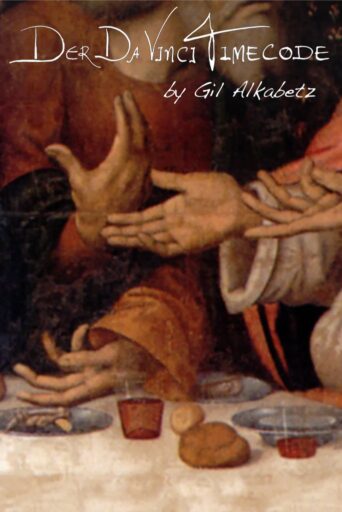
Da Vinci Code, Gil Alkabetz (2009)
GSch : I loved this film by Gil Alkabetz, made in 2009, before La bataille de San Romano, which dates from 2017.
GS : When did you decide to use a cycle of 36 drawings, for example?
GSch :There is a lot of correspondence between tempos per minute and the classic rhythm of 24 frames per second in cinema. The best known is the tempo of 60 for the number of seconds per minute, or 120 for the number of half-seconds per minute. There are also 8 frames, 9 frames, 10 frames, 12 frames, 16 frames, 18, 20, 24, and 32 frames that correspond to tempos. In the film Retouches, I started with the idea of a long cycle, i.e., a wave, of 48 frames going out and 48 frames coming back, for a total cycle of 96 frames. But within this cycle, there were also 32, 24, 16, 12, and 8. Everything that happens in the film is based on different cycles, but all of them can be included in 96: a tennis player, a runner, birds… The hurdle jump is done in 8 frames, 8 frames, 16 frames, and so on, to complete the course. I made the entire film without music, and then Normand Roger composed the music for the film. He didn’t follow the logic of the images exactly; he used a ternary rhythm, even though 16 cannot be divided into three. But it was a good idea. It creates a distance between the drawings and the music. I was very happy with the music he composed for this film.
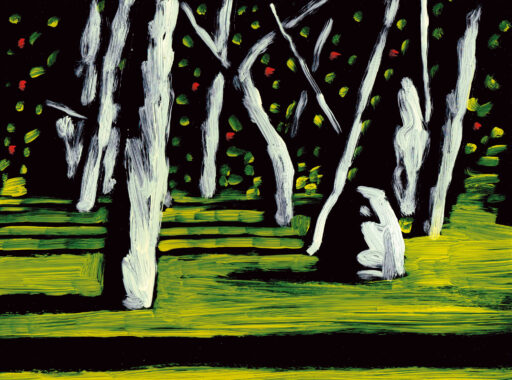
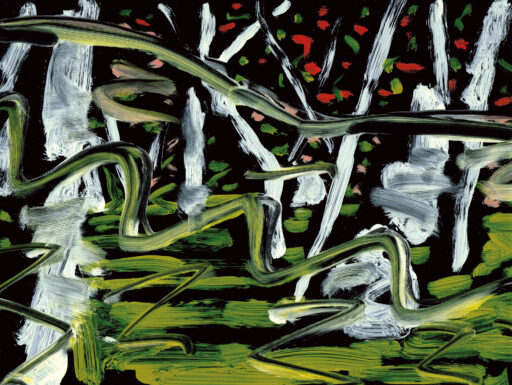
Retouches (2008)
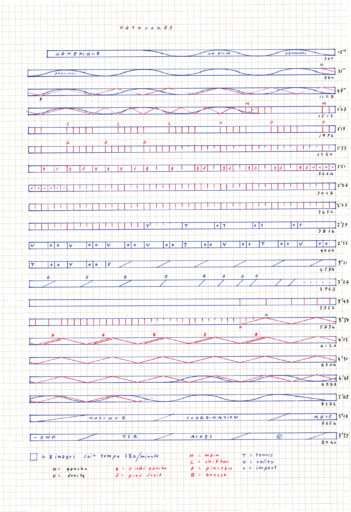
Schéma pour Retouches
GS : Visually, with this arithmetic, if you put very contrasting images, in black and white for example, and next to them, on the same rhythmic canvas, you put very pale images with little contrast, it produces a different feeling. This is perhaps where a graphic universe (I don’t like to use the word “style”) comes into play, quite assertive with the dark background and colors added on top.
GSch :Yes. There is no white, or very rarely. I’m more concerned with how to move from one shot to another in the most elegant way possible, or in a way that I like. The question of contrast depends on the subjects. I choose colors that I like. There are no rules.
GS : The spirals and proportions you use are forms that can also be found in music. Do you sometimes consciously try to reproduce, for example, the form of the sonata, or the form of the fugue with structures such as inversion, repetition, variation on a theme, symmetry, which music uses a lot?
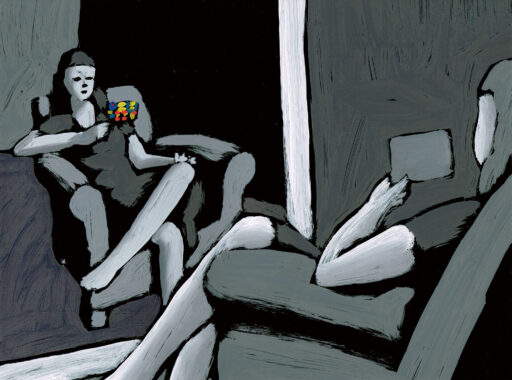
Fugue (1998)
GSch : I’m not a musician, but I use musical structures such as intertwined rhythms, like two eighth notes that make a quarter note, two quarter notes that make a half note. I do the same thing with the rhythms of animation. Even if I don’t have music, I like to respect these rhythms and this regularity in animation. And if I do have music, it gives the rhythm and the whole structure of the film.
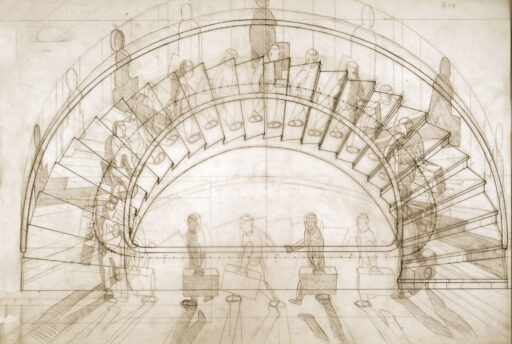
Animation pour Fugue
(extrait de Filmonographie 1974-2020)
WH :Returning to the question of contrasts raised by Georges Sifianos, there is one film in which the choice of colors is not simply a matter of taste. This is Fugue, which mainly features scenes with bold colors—blue, yellow, or red—contrasting with certain sequences in black and white. This produces highly contrasting images, in the style of the Fauves.
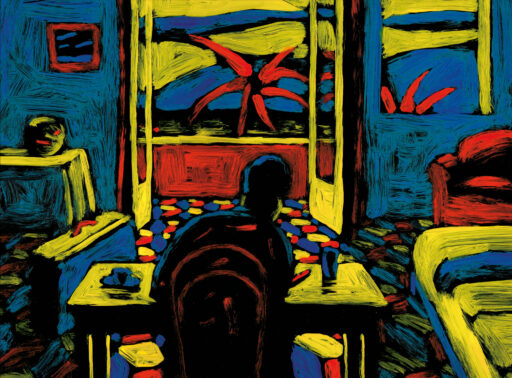
Fugue (1998)
GSch : For Fugue, the initial idea was to make a drawn fugue. But since I’m not a musician, what I made wasn’t a fugue. Then, the idea was to take the primary colors—red, blue, and yellow—and gradually mix them together to get all the colors. But I liked the result with the primary colors so much that I ended up making almost the entire film using only those three colors. Michèle Bokanowski, whom I had met at the Annecy festival during a retrospective of her husband Patrick Bokanowski’s work, was to compose the music for the film. I really liked Patrick Bokanowski’s films and I realized that it was his wife who did the music. I asked her if she would agree to do the music for my film, Fugue. But when I finished the film and she saw the images, she told me that it wasn’t a fugue, but rather variations. And so she did the music. I had previously edited my film to Beethoven’s Heroic Variations and Fugues, thinking that if I didn’t like her music, I could always fall back on that as a Plan B. But in the end, even though she didn’t compose a fugue, but variations, I chose her music. It’s better to have original music that I found very beautiful.
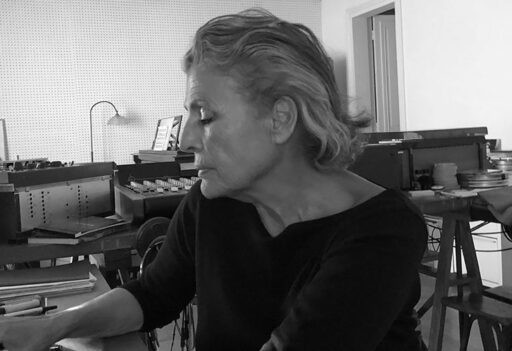
Michèle Bokanowski (photo : Patrick Bokanowski)
GS : You have stated several times that you are not a musician, yet practically all your films are based on music. All your films are musical. You are immersed in a musical world, and you have a son who is now very well known as a musician.
GSch :Yes. I listen to classical music all the time, but I’m not a musician. When I see a painting, I know immediately what it is, what period it’s from, and who the artist is. With music, it’s vague. I either like it or I don’t. I find it difficult to analyze. My son has helped me understand musical phrases and the composition of a piece more easily. Otherwise, I have to listen to it many times to understand it. I don’t play an instrument. I don’t have a very good ear either.
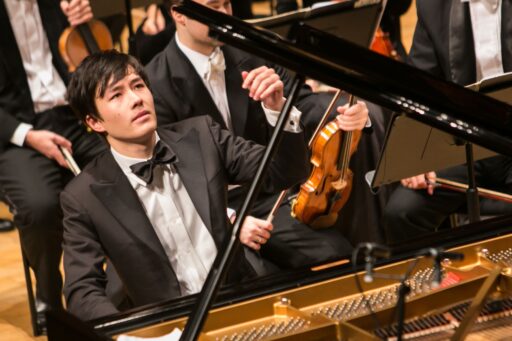
Louis Schwizgebel-Wang (photo : Tatler)
Isabel Aboim Inglez :This conversation reminds me of Kandinsky. In Georges’ films and Kandinsky’s paintings, there is a tension with music and an understanding of music. I don’t know if Kandinsky was a musician. Unlike Georges, it’s not always figurative, but the use of colors, without contours, is sometimes similar. The way the shapes dissolve.

Improvisation 3, Vassily Kandinsky (1909)
WH : The use of geometry also brings Kandinsky to mind.
GS : In some of Kandinsky’s early works, there are dark backgrounds and light colors, and the shapes are outlined against the background.
Have you ever thought about the connection with Kandinsky?
GSch :No, not really, but I really like painting, and when I make a film, I do my research, I look at lots of images and paintings that give me ideas.
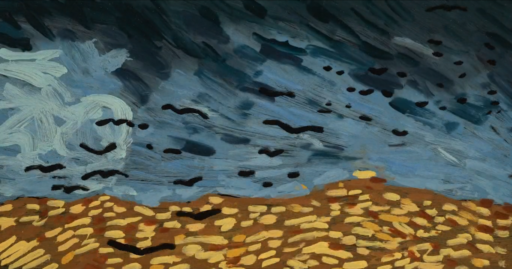
WH :Generally speaking, even if there is no immediate reference to Kandinsky, there is the whole legacy of modernism and all those painters who explored matter, color, and form. Except that in Georges Schwizgebel’s work, this is brought into play through movement, metamorphosis, anamorphosis, cycles, and loops, thanks to the specific mechanisms of animation.
D’une peinture… à l’autre (2023)
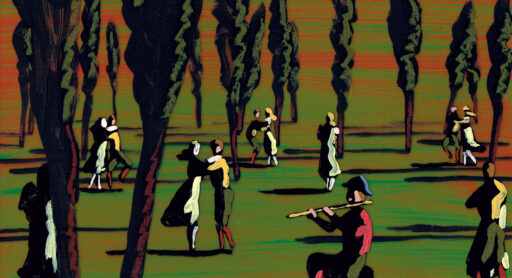
GS : Well, you may not be a musician, but do you feel like a dancer? Because in your films, the camera dances, the space dances almost constantly. This mobility of space, sometimes more naturalistic, sometimes more abstract, is a very important ingredient in your films.
GSch : Dance and animation share the dimension of movement, the visual dimension, and the relationship to music.
Chemin faisant (2012)
GS : Norman McLaren wanted to be a dancer, but since he was shy, he took refuge behind drawing and the camera.
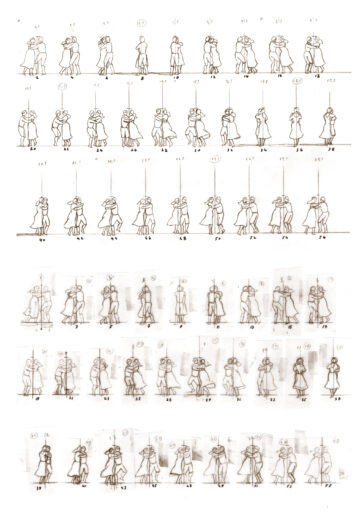
GSch :I like dancing. Or rather, I used to like dancing. I don’t dance much anymore. I see this connection between animation and dance. Choreography is also important for animation.
Animation pour Chemin faisant
(extrait de Filmonographie 1974-2020)
GS : But it’s not a choreography of dancing elements, it’s a choreography of space. It’s the space that dances, or the camera in a way.
GSch :Precisely, since we’re working in two dimensions, we want to imitate the third dimension, to make movements in space. When I talk about camera movements, it’s not the camera that moves, but the drawing that imitates camera movements more or less accurately.
With computers, it was a bit the opposite: there are so many possibilities that you have to choose. Whereas when you only have a pencil and paper, you have to try to go beyond those possibilities.
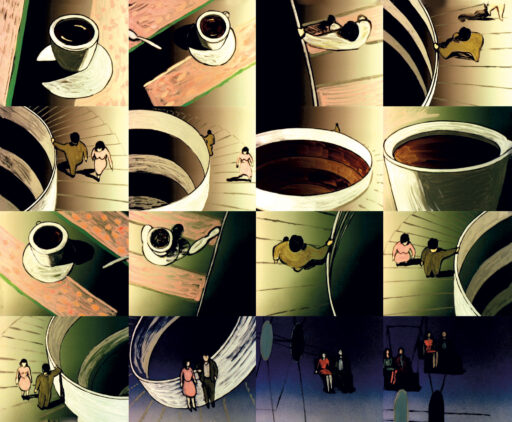
WH : There is a real tension, as in modernist painting, between flatness and depth. And in certain sequences of transformation, the viewer’s gaze is trapped in this transition between depth and ultimately something that reveals itself as a flat drawing. This produces spaces à la Maurits Cornelis Escher, which create hollowed-out spaces that are not entirely realistic, but rather geometric or abstract in nature.
Séquence extraite de 78 tours (1985)
GS :Does this connection with Escher’s universe speak to you?
GSch :People have often told me that it’s like animated Escher, because I also like impossible shapes. When I was working in an advertising agency, I designed a poster for the European Leisure Biennial featuring an impossible triangle. In Fugue, there are impossible volumes and unusual movements in space.
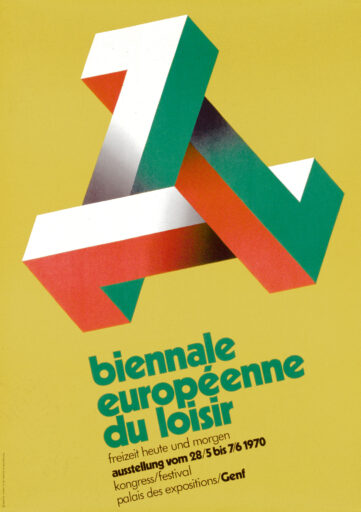
Poster for the European Leisure Biennial (1970)
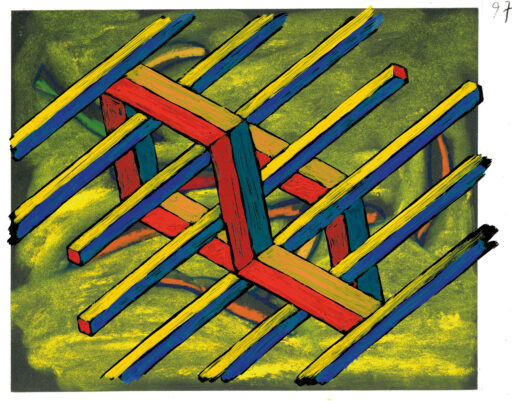
Fugue (1998)
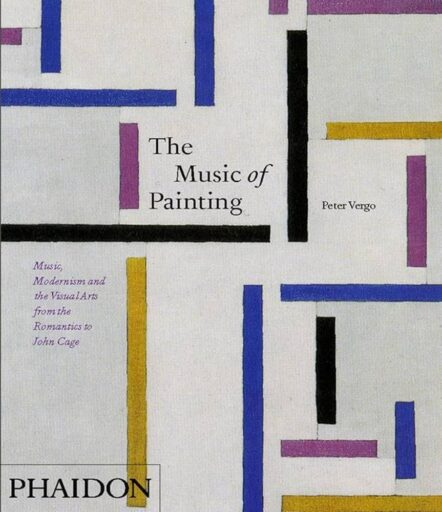
Z : There are many publications on the relationship between painting and music. One of the most relevant is Peter Vergo’s The Music of Painting, which focuses on painters such as Paul Klee, Kandinsky and Mondrian.
Vincent Gilot :In animation, we use cycles of 12 frames, but not cycles of 12.74 hundredths of a frame. Whereas in music, with Bach, it’s very regular, but the beat is internal, it can take fractions of a second. In cinema, we are always bound by, at best, a 60th of a frame, if we start with films with a frequency of 60 frames. But generally in 24, that means we do 6, 8, 9, 16. It’s very artificial.
When I showed your films to the students at La Cambre, I showed them the essence of animation, the fascinating and incredible pure mental construction that completely leaves reality behind because the rhythm is crazy. In real life, I’ve never met anyone who walks at 12 frames per second because, as soon as you rotoscope, you realize that they don’t walk at 12 frames per second, whereas in animation, they walk at a defined pace. This artificiality is what makes animation so rich. And your films really bring that out. In La course à l’abîme, there is an abyss into which we plunge and we are caught up in a phenomenon that is beyond us, which is not simply a transcription of reality, but pure creation.
GS: I wonder if, in animation, we can have something equivalent to the “cycles of 12 frames and 74 hundredths of a frame,” as in Bach’s work, which Vincent mentions, or proportions that are less rigorous than those that result mechanically from the division of film into frames. In any case, this concerns the way in which the images will be perceived.
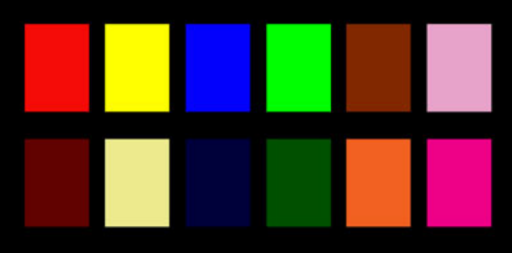
If I take these color samples, for example, we can see that they don’t all give the impression of being at the same level of depth. Some are brighter, even aggressive, while others fade into the background.
If we color the figures in an animation with this flashy green, we will probably—I would say certainly—perceive the duration differently than we would if we painted the figures with the brown at the bottom, which does not stand out.
The vitality of a color should add something to the duration of its perception. This is what I was referring to earlier when I mentioned “high-contrast images in black and white alongside very pale, low-contrast images on the same rhythmic canvas”…

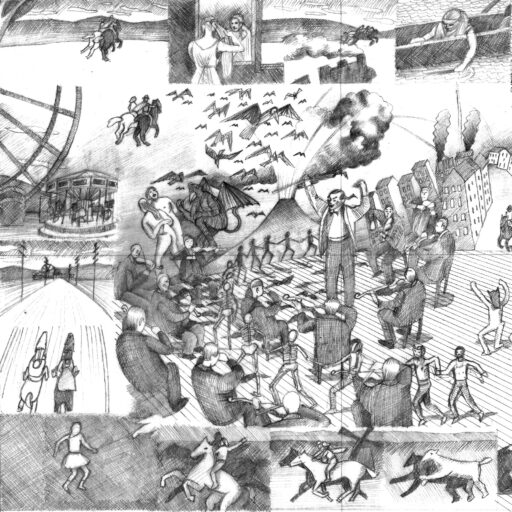
Storyboard and sketch for La course à l’abîme.
(excerpt from Filmonographie 1974-2020)
Z : In Goethe’s poem, The Erl-King, which inspired your film of the same name, we know that the child dies. But in the film, there is still some doubt.
GSch :People who have been educated in German all know the first and last lines of the poem, which ends with the death of the child [Editor’s note: In seinen Armen das Kind war tot. In his arms the child was dead.]. So we can’t really change the ending of the film or the story. Fortunately, the music is very beautiful.
With regard to this film, I sometimes explain that when you make a film based on music, it’s difficult to make a narrative film because the music evokes lots of ideas, which may be different for each person. We are captivated by the music. But for The Erl-King, Schubert wrote this music based on the poem. So it was easy to remove the lyrics and replace them with images to make an animated film without dialogue.

Le roi des Aulnes (2015)
Z : You can really feel that vertigo in the film.
GSch :Of all the films I’ve made, this one has been the most successful. It won four major awards and made me a lot of money. That didn’t happen with the other films. Someone told my son that it was the first time they had ever seen Goethe’s story told so well. I was afraid that people who didn’t know the story wouldn’t understand the film. I myself loved the music without knowing anything about the story.
It was my son who, one day in China, had to explain to the audience what he was going to play, and he talked about the poem. That’s when I had the idea and said to myself that this was exactly what I was going to do: replace the words of the poem with images.
Some students from Taiwan came to my studio in Geneva. I showed them the line test for the film and asked them what they understood. There were lots of different stories. One believed, for example, that there were several generations. The film wasn’t in color, of course. I changed a lot of things after their comments to identify what could be perceived as red herrings. At one point, there was a portrait of a queen, which was a red herring: it had nothing to do with the story.

Le roi des Aulnes (2015)
WH : You mentioned students. Vincent talked about showing your films to students. And indeed, these films also serve as a kind of educational toolbox, in that they address all the challenges of animation by taking advantage of all the expressive possibilities of the discipline: rhythm, the relationship to sound, transformation. It’s no coincidence that this meeting is part of the Beatbit platform, since all of this is brought into play on the site through the sequences that Zepe has produced with students.
Have you conducted any educational experiments in workshops or schools?
GSch :Not really, because I’ve never taught. I’ve sometimes been invited as a guest speaker, for example at La Poudrière, where they don’t have teachers but invite specialists in the field of cinema.
EN : Many of your films are based on a work of art—painting, music, literature. Are these pre-existing works really the primary inspiration, or does it come more from a visual idea around animation? Obviously, it’s always difficult to imagine how the premises of an idea come about.
GSch : It depends on the film. The idea for my first film, Le vol d’Icare, came from neon signs. I thought it would be nice to animate these dots with harpsichord music by François Couperin. As if each dot were a note. There was no particular work that inspired me to make this film.
At the time, in 1974, people thought it was done on a computer. I replied that you couldn’t do gradients like in the film on a computer, and at the time, that was true.

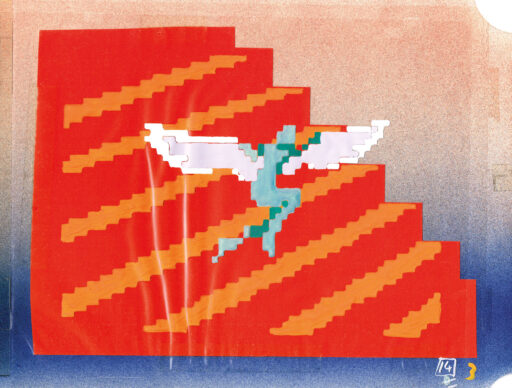

Dessins préparatoires et procédé pour Le vol d’Icare (1974)
(extrait de Filmonographie 1974-2020)
The idea for the second film, Perspectives, came from an observation. During a vacation in Greece, I filmed a friend walking from a balcony, and I realized afterwards that at the beginning you see her from the front and at the end she is from behind in roughly the same place on the screen, and that by modifying it a little, I could make it into a cycle. That became the initial idea for creating a cycle. I added one or two other cycles using rotoscoping to a prelude by Bach.
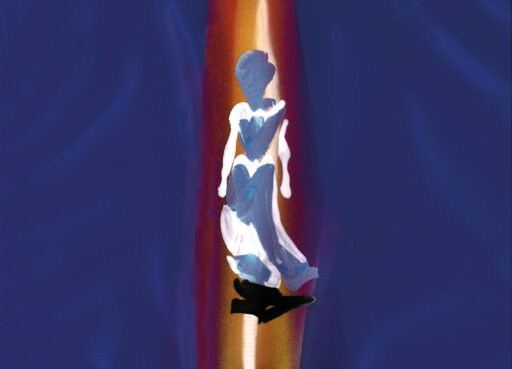
Perspectives (1970)
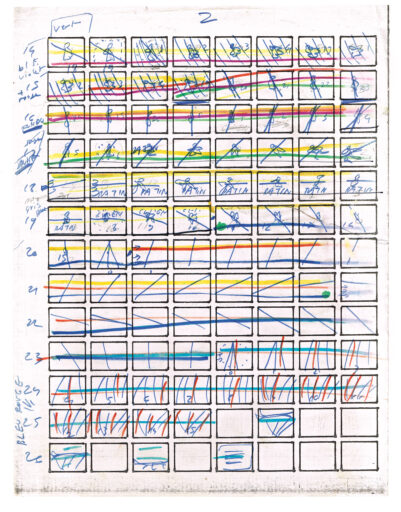
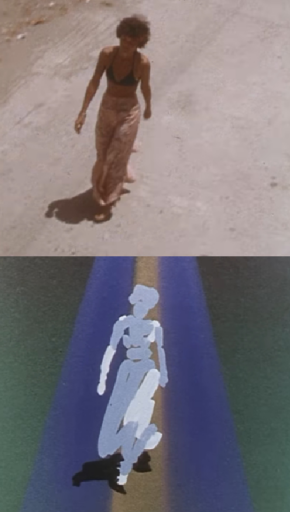
Schéma et image de référence pour Perspectives
(extrait de Filmonographie 1974-2020)
Then, in Hors-jeu, I also used rotoscoping. Why did I use rotoscoping? In the film Yellow Submarine, the sequence Lucy in the sky with diamonds is rotoscoped, and I found it so beautiful that it made me want to use this technique. And it’s also quite appealing because the movement is perfect. After that, I stopped using rotoscoping because it has the limitations of continuous shooting, and I prefer to draw by hand rather than trace reality.
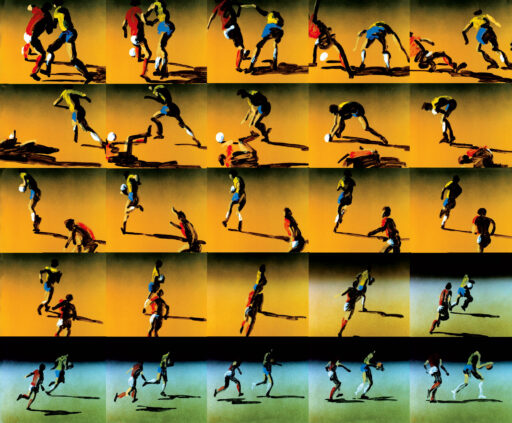
Séquence extraite de Hors-jeu (1977)
For the fourth film, Le ravissement de Frank N. Stein (The rapture of Frank N. Stein), the idea came from meeting a musician, Michael Horowitz, who was doing something similar to animation. For example, he would record someone speaking, then remove all the vowels and edit the sound. We wanted to work together. He created sounds that I listened to, then I made images that he looked at. And, little by little, the film was built piece by piece, born from a collaboration between a musician and me.
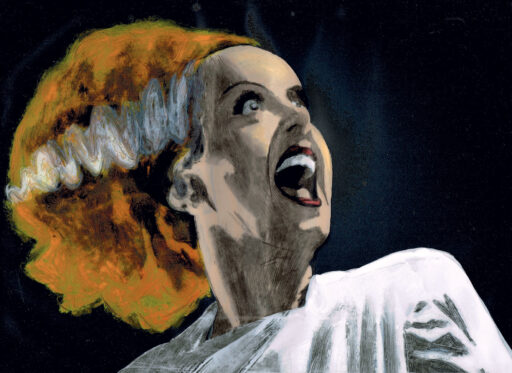
Le ravissement de Frank N. Stein (1982)
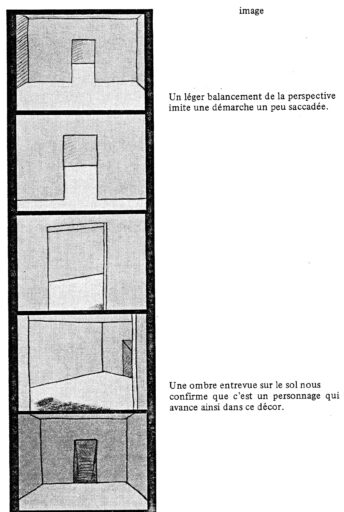

Storyboard and preliminary sketch for Le ravissement de Frank N. Stein
(excerpt de Filmonographie 1974-2020)
For the fifth film, 78 tours (78 RPM), it wasn’t a work of art to begin with either. I had an old 78 rpm record. I simply had the idea of showing things that spin or that we spin around. It would have been a bit of a stylistic exercise. But there is vaguely a story with two points of view, one where the viewer is in the music and one where we see where the music comes from.
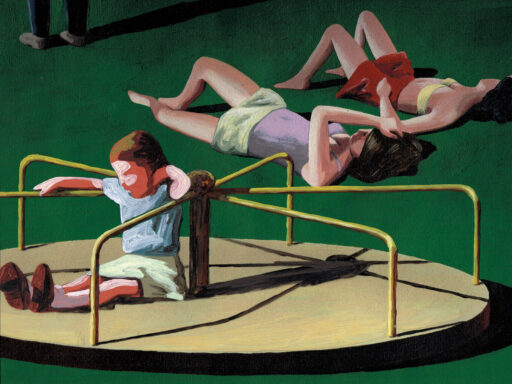
78 tours (1985)

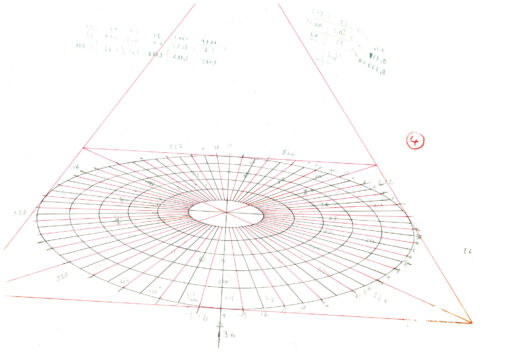
Reference image and diagram for 78 tours
(excerpt from Filmonographie 1974-2020)
Quand j’ai réalisé Le Sujet du tableau et que je suis parti de la peinture de Vermeer, L’atelier du peintre. que j’ai eu l’idée de traverser des peintures et, dans ce film, il y a beaucoup de références à des peintures existantes.
When I made Le Sujet du tableau (The subject of the painting) and started with Vermeer’s painting, L’atelier du peintre (The painter’s studio), I had the idea of crossing through paintings, and in this film there are many references to existing paintings.
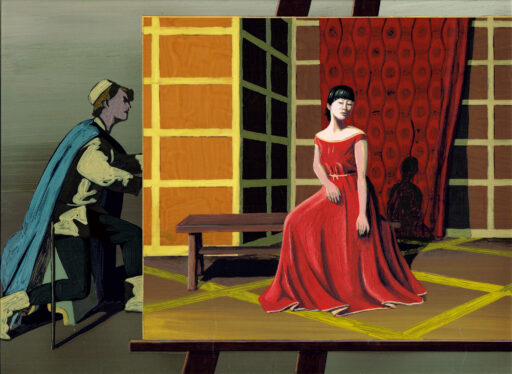
Le sujet du tableau (1989)
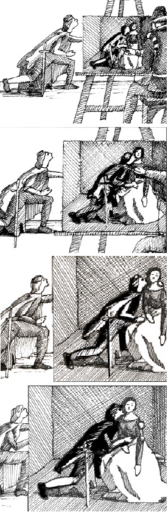
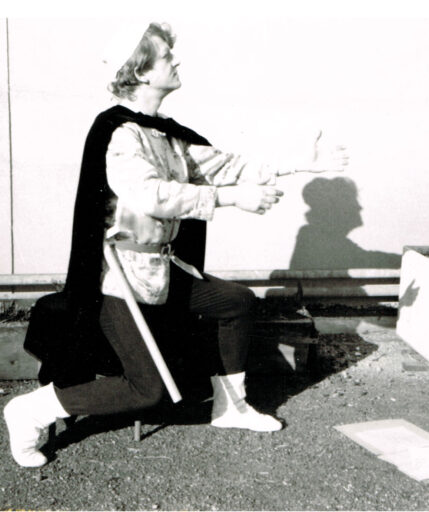
Story board et image de référence pour Le sujet du tableau
(extrait de Filmonographie 1974-2020)
WH : I will conclude by mentioning the book published in 2020, Filmonographie 1974-2020, published by Hélice Hélas and La 5e Couche, which traces 36 years of films. It is published in Chinese, and I imagine that Georges will be going there to launch the book.
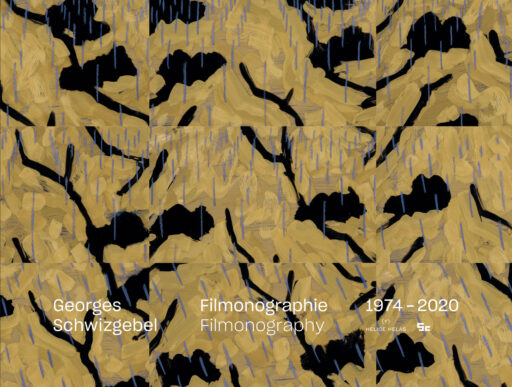
Filmonographie 1974-2020 (Hélice Hélas – La 5e Couche, 2020)
GSch : Yes, that’s why I’m going there. I’m also going to do a workshop with students from the Beijing Film Academy of Animation. I’m going to explain to them how to create movement in a cycle, as in many of my films. The first time I did this workshop was in Japan. Then I was asked to do it several times in France, in Fontevraud for example. In Beijing, I’m also going to suggest, as in the film Retouches, creating a cycle and moving the reference points so that something moves in the setting and, ultimately, it’s the setting that moves around that thing. I’ve prepared a few examples. What’s quite handy is that in a few days, everyone has a 20- to 30-second film.
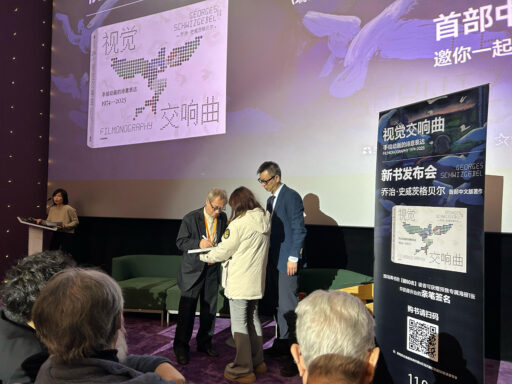

Presentation of the Chinese edition of the book, Filmonography 1974-2025, at the Tanko Mentougou district cinema hall of the First Youth Film Center in Beijing on November 6, 2025. First signed copy.